
Episode 557

Welcome to another episode of Build a Better Agency! This week, host Drew McLellan is joined by operations expert Trevor Foley for a deep dive into the nuts and bolts of agency operations—where profit is made or lost. With decades of experience across agency and client-side roles, Trevor Foley brings a practical, battle-tested perspective on how agencies can tighten processes, reduce chaos, and build more resilient businesses.
Together, Drew McLellan and Trevor Foley unpack why project managers and producers are the agency’s unsung heroes—and biggest missed opportunity when stripped of real authority. They discuss how clarity around roles and a return to a disciplined project management structure can swiftly eliminate internal confusion, empower teams, and boost profitability. You’ll hear real-world examples of how this shift allowed organizations to streamline communication, reduce revisions, and keep client relationships strong.
The conversation doesn’t shy away from modern challenges, either. The duo addresses the proliferation of communication channels—a blessing and a curse—and offers actionable advice on consolidating tools and reclaiming a single source of truth within your agency. They also explore the evolving role of AI in agency life, not as a replacement for jobs, but as a means to optimize and automate tedious or repetitive tasks to let human talent flourish in strategic and creative roles.
If you’re ready to cut through operational noise, empower your team, and reclaim your agency’s profitability, this episode will leave you with practical strategies you can implement right away. From better briefs to smarter AI use and truly collaborative—not chaotic—workflows, you’ll walk away with a playbook for building an agency that’s efficient, effective, and ready for whatever comes next.
A big thank you to our podcast’s presenting sponsor, White Label IQ. They’re an amazing resource for agencies who want to outsource their design, dev, or PPC work at wholesale prices. Check out their special offer (10 free hours!) for podcast listeners here.
What You Will Learn in This Episode:
- Why project managers should be treated as the center spoke of operations, not traffic cops
- How to eliminate the communication chaos created by multiple platforms and channels
- The hidden costs of collaboration overload and how to streamline decision-making processes
- Why giving project managers real authority can immediately improve workflow efficiency
- How to audit your current operations to identify where time and money are bleeding
- The difference between collaboration and compromise in agency workflows
- Why AI amplifies existing processes rather than replacing roles in agency operations
- How to establish clear lanes of communication that scale with your team
- The operational frameworks that helped agencies like Lexus maintain premium standards
Ways to contact Trevor:
- Website: trevorfoley.com
- LinkedIn Personal: linkedin.com/in/trevorfoley
Resources:
- Drew’s Book: Sell With Authority
- AMI Facebook Group: https://www.facebook.com/agencymanagementinstitute
- AMI Preferred Partners: https://agencymanagementinstitute.com/ami-preferred-partners/
- Agency Edge Research Series: https://agencymanagementinstitute.com/agency-tools/agency-edge-research-series/
- Upcoming workshops: https://agencymanagementinstitute.com/advertising-agency-training/workshop-calendar/
- Weekly Newsletter: https://agencymanagementinstitute.com/newsletter-sign-up-form/
- Agency Coaching and Consulting: https://agencymanagementinstitute.com/advertising-agency-consulting/agency-coaching-consulting/
Danyel McLellan [00:00:01 – 00:00:31]
Welcome to the Agency Management Institute community where you’ll learn how to grow and scale your business, attract and retain the best talent, make more money, and keep more of the money you make. The Build a Better Agency podcast, presented by White Label iq, is packed with insights on how small to mid sized agencies are getting things done. Bringing his 25 years of experience as both an agency owner and agency consultant, please welcome your host, Drew McLellan.
Drew McLellan [00:00:37 – 00:02:35]
Hey, everybody. Drew McLellan here with another episode of Build a Better Agency. Today we’re going to talk about operations and how we can tighten operations so that we can squeeze every ounce of profit out of every job as opposed to having it languish inside our bloated systems and processes. Having the right team to help you manage the work is critical. And honestly, that’s one of the things that I think is really different about our friends at White Label is they don’t treat partnerships as quick hits or transactions. They actually make sure that every agency gets a dedicated account manager and a dedicated project manager for every website or digital project they do for you. And it’s not because they think you need to be babysat and is because they know how critical those roles are to real collaboration and the connection between all sides. And since their whole business is about supporting agencies with design, dev and paid media, that AMPM support is baked right into how they show up as a partner and still how they can save you a ton of money and help you build a great product that you can sell for a great profit. They want to know how you like to work and then they adapt to that. So they really live out that concept of let’s roll up our sleeves and let’s work together and they make sure they bring the right team to the party. So check them [email protected] AMI to learn about how they have a special program just for you. All right, so my guest today has spent a lot of time in agencies and on the client side in operations, and we’re going to talk about some of the things he has observed over the years that that have either evolved or eroded away that are costing us time and money and how we can put them back. So without further ado, let’s welcome Trevor Foley to the show. Trevor, welcome to the podcast. Thanks for joining us.
Trevor Foley [00:02:37 – 00:02:39]
What a pleasure. Thank you so much for having me.
Drew McLellan [00:02:40 – 00:02:46]
Tell everybody a little bit about your background and how you came to have the insights that we’re going to dig into today.
Trevor Foley [00:02:47 – 00:03:17]
Yeah, absolutely. Again, Drew, such a pleasure to give everyone a little background. My name Is Trevor Foley. I’m born and raised Los Angeles, big Angeleno, third generation. Love my city. And I started out my career in advertising and particularly production back in the late 90s. I can’t believe I’m saying that out loud, but yeah, back in the late 90s, started my career in production design side at McCann Erickson, which obviously later became Universal. McCann.
Drew McLellan [00:03:17 – 00:03:18]
Right.
Trevor Foley [00:03:18 – 00:09:10]
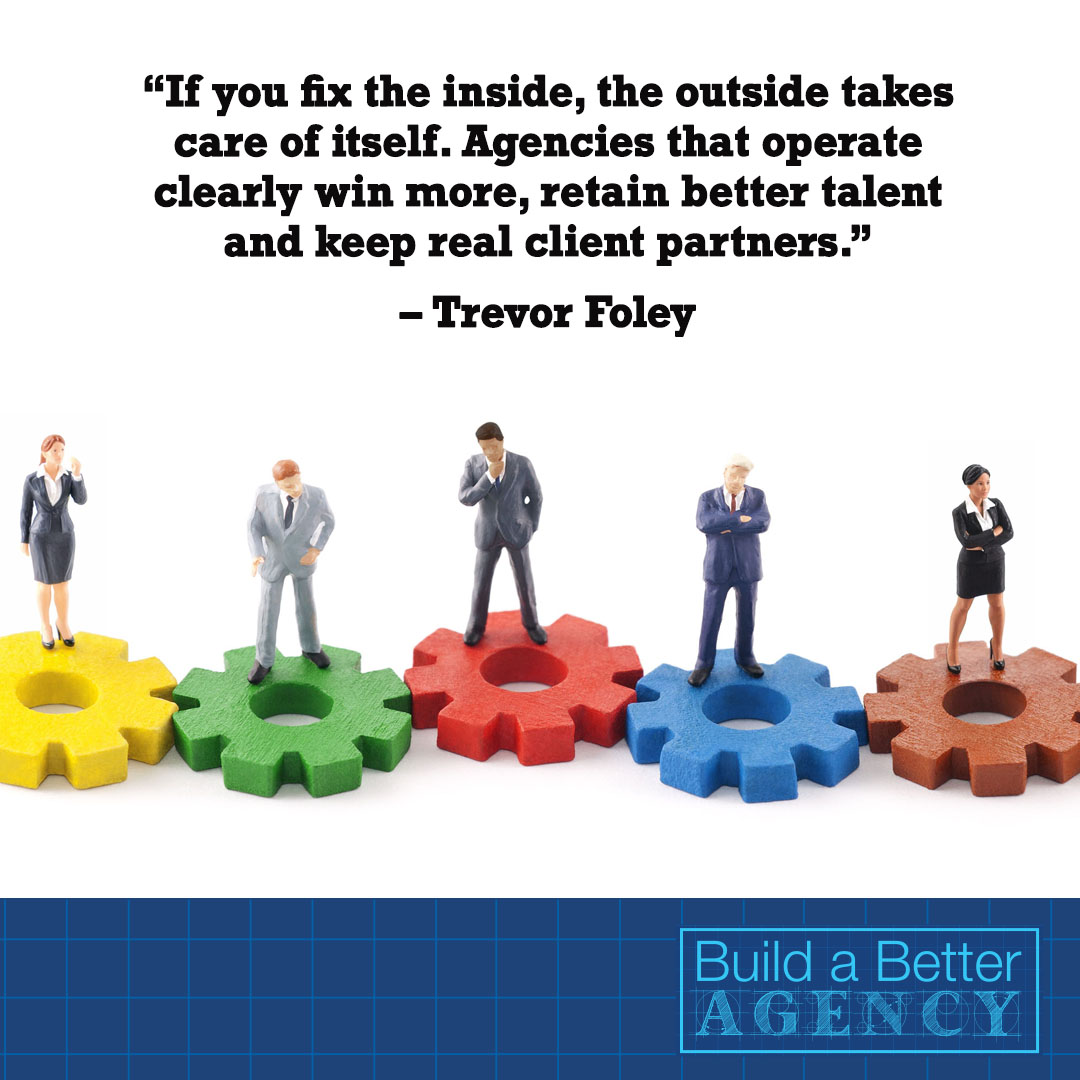
Really gave me a great background coming in in the late 90s, the very tail end of, let’s call it the heyday or traditional side analog side of advertising. So it really gave me a great view of how everything works. From there, I moved into a producer role at Hulu. I was lucky enough to be a part of an amazing ride back in early 2011 when the company was still small, private, still run by the founding CEO. You know, there’s no Hulu plus, it was just library content and no original shows. It was just in the web browser at that time. Jason Kyler, like I said, he was the founding CEO. I really got a great front seat view and a true masterclass in leadership and operations and building a culture from him. Amazing ride. Like I said, we grew so fast. We expanded offices, changed buildings, you know, multiple times in three years. And I was on a team that was essentially there to build the delivery infrastructure fast enough so that it didn’t collapse under the weight of the growth. It was, you know, it was such an amazing time. We launched ad products, we, you know, hit every deadline, milestone, launched on new devices, Xbox, PlayStation, all that stuff. At that time, such an amazing ride to also get a front row seat to see how we develop partnerships, you know, not only with our advertising partners, but how we built partnerships with external teams and vendors. So really to that experience, I think shaped the very beginning of my operations kind of philosophy. Early on after Hulu, I moved into the agency side of operations a little bit more of a senior leadership capacity. Spent seven years working at team One primarily on Lexus. Everyone knows Lexus is a luxury and premium brand. Team One within the pubis universe. It was again another amazing experience to partner with other, you know, department leads, really, you know, institutionalizing operations across all the North American offices. You know, big brands like Lexus, they’re like a giant cruise ship, you know, it’s a lot to turn the ship, so you got to be really calculated but very high standards. Working with Lexus and a team One, zero tolerance for kind of operational sloppiness. And lucky enough with timing at that time, Lexus and Toyota was moving out to Plano, Texas. So we really began this process of overhauling our workflows to how we could work, let’s just call it across offices right before, right before COVID hit. So it was great when Covid hit and we had to adapt. We were already kind of started the process and we can hit the ground running. So yeah, we were able to integrate new technologies which I can talk about. We implemented a true digital asset management structure and team, you know, brought in some Agile frameworks and then just transitioned, you know, 400 plus employees remotely, you know, like many people, luckily almost overnight. So the last one really mattered a lot to me because it wasn’t really a creative score, it was really an operational score, you know, which I think you know, is really where the leverage is. That’s really my theme nowadays is where leverage is. We’re for advertising, marketing for so long we get caught up in the like new business and creative. But I’m here to talk about where I think, you know, operationally we’re going. So from there moved on to Wonderman Thompson, running a program director role, partnering with other account leads to manage a 20 plus million dollar portfolio. Those accounts included Snapchat, Shell, Gasoline and along the way leading teams of program managers, project managers, producers. And the big win there operationally was our ability at that time to really cut digital web asset deliveries by 20% by really optimizing how we worked with international development teams and we implemented a true team task management system. So that one I think was really huge win. And that’s to me where operational discipline, how much that really look, how much of a big win that really looks like when you lean into things like, you know, operations. And then like I mentioned earlier today, I work in house or independently with agencies or brand side organizations as really a strategic and fractional operations partner. So what that means is in practice I come in, I help teams build, improve and completely restructure their internal infrastructure that keeps the work moving cleanly, keeps good people from burning out and leaving, and keeps clients from coming back. The internal swirl that so many agencies have really normalized the last half a dozen years or so, you know, these six hour zoom days, the confusion of who owns what, the tons and tons of rounds of revision that’s revisions that should have never happened, you know, you know, it’s a design problem. And I really think what’s great about design problems is they’re fixable. So the through line across everything I’ve done, whether like I said, it’s building ad products at Hulu or overhauling production at team one or you know, running a team of PMs across a multi account portfolio at Wonderman is really this. If you fix the inside, the outside takes care of itself. So agencies operate clearly, win more, retain better talent and keep those real client partners in house, you know, and that’s, that’s the real work.
Drew McLellan [00:09:11 – 00:09:44]
So I want to dig into some of the things, some of the best practices or some of the beliefs that you’ve kind of come out of your career. And one of them that I thought was interesting is, you know, agencies are struggling today and have been struggling since COVID with you know, do we work remote, do we work hybrid, do we all live in under a brick, you know, and mortar setting? And you know, the trend right now is people are going back into an office more often. And so I’m curious, I know you have a take on agencies love affair with the idea of collaborating.
Trevor Foley [00:09:45 – 00:09:45]
Yeah.
Drew McLellan [00:09:45 – 00:09:53]
And sort of what that means to us sort of intellectually and emotionally versus what it means to us from a business perspective.
Trevor Foley [00:09:54 – 00:11:44]
Such a great distinction. I mean I can talk about return to office all day. I definitely have my tons of experience and tons of thoughts and what I’ve seen, work or not work, you know, leading into return to office and collaboration. So love to jump in. One thing I also want to make sure and I mentioned because I obviously know it’s the hot topic that’s going to come up and I listened to your last session with Cade Daniels and I think that’s AI. So I really want to kind of plant this early that you know, AI is going to come up. This isn’t about replacing. Yeah, AI is not about replacing roles. It’s really about optimizing processes. So this is where this comes into play like the real difference. You know, agencies that, you know, look at AI correctly I think will really, will really win in the end. AI can amplify what’s already getting done. Clean operations, messy operations plus AI is really just the same chaos, but just more so that being said, what I think is really interesting with this collaboration model is kind of the state of our industry. And I think with this push to collaboration has also become. Agencies have flattened really seeing that mode. And when agencies have flattened so drastically over the last decade or so, responsibilities are now overlapping. And with responsibilities, that’s that collaboration that you’ve talked about. And I think like you also mentioned, collaboration is really more about feelings than it is really about getting things done. Now feelings are important and collaborating is important, but I think we’ve somehow lost our way where collaboration has turned into Compromise. So if we’re collaborating too much, we might be compromising, and that’s. I think we’re seeing a lot of swirls. So teams are spending six or more hours a day on zoom calls because no one is sure who actually owns what. So everyone intends everything to stay informed.
Drew McLellan [00:11:45 – 00:11:45]
Right.
Trevor Foley [00:11:45 – 00:13:47]
You know, that’s not collaboration, that’s just confusion with the calendar invite. You know, getting back to the basics of work and how it moves. While, like I said, experimenting with AI can be really looked at as not like a step backwards, I really think it’s like taking one step back to take five steps forward. And I think this is really going to be the strategic play over the next five years. You know, AI is still genuinely new. You know, I really look at it like, you know, Microsoft Office didn’t replace the people that use typewriters. It just gave them the capability of doing things that typewriters couldn’t do or doing them faster or doing it faster. Yeah. So we’re. I think we’re right at that moment with AI, where it’s. I think everyone’s sort of panicked, like, oh, it’s going to replace roles. I think it’s going to make, if you have processes and, and roles and responsibilities down, AI will just take that to the next level. But if it’s chaos, AI is going to create even more chaos. So I really think that this idea of return to office, not return to office, I think that’s a perfect kind of wrapper for does it really matter? Like, you know, let’s. Let’s figure out what your business problems are. Just like clients, like, we shouldn’t be selling services anymore. We should be selling solutions. So should you come in one day a week or five days a week or no day a week? Should everyone come in? Should someone come in? It kind of is specific to your team. I’ve gone into an office and I’ve sat at my desk or my office, and I’ve had Zoom calls all day with people that weren’t in the office. Now, no one’s going to say that makes sense. And I’ve gone in the office where I’ve truly collaborated and partnered and worked with people and got to know them, and then there was benefits there. So it’s really trying to figure out what makes sense for your business. And I think this is such a good time for us to get creative because now we have AI to solve some of these easier problems. Let’s try to be smart, so hopefully that makes sense.
Drew McLellan [00:13:47 – 00:14:02]
So in terms of collaboration, one of the Things you mentioned though is that the problem is a lot of chiefs, no Indians, everybody thinks they’re in charge or everyone thinks they’re not in charge. And so how do you solve that problem?
Trevor Foley [00:14:03 – 00:17:03]
Yeah, to get real direct what I’ve seen, solve it immediately. That is a quick solve that I think we’ve moved away from is I think your project managers, your producers, your program managers, whatever you want to call it, they’re now your secret weapon and your biggest missed opportunity. Because I think like I mentioned earlier, how the agencies have flattened now everyone is a collaborator, everyone’s on the same team. We’re all, we’re all kind of like, like you said, the chiefs and Indians, we’re all just trying to make decisions where. Now I think if the agencies treat your producers, your PMs, they’ve gotten away from them being the center spoke of the wheel and they’ve started to treat them. It’s they become executive assistants where hey set this meeting or take these notes or track status or relay my message from the creative team to the account team. So then what happens is this is giant swirl. But if you were to flip and give the PM’s really real authority, if you were to stop making the PMs of traffic cops and start, they can start being the engine, you’d be amazed at how fast the work will go, how clean it will go and how much less chaos you’re going to have. And the model has existed. I mean, we just forgot about it. I think in our industry, like you know, think about the commercial construction industry, you know, you have a general contractor just like a pm. They’re the most senior subject matter expert. You know, they’re not the architect, they’re not the structural engineer, but they’re the owner. Nothing moves without them. Because like every trade, there’s a separate timeline. There’s a separate budget, there’s a subcontractor, there’s a person who works with a person. There’s a dependency. So if you make that center spoke, that pm, that producer, that’s how you can manage. And that’s how the construction industry has built complex multi million dollar buildings that are on schedule because they have that project lead who’s whatever you want to call it now, it’s the same thing with the film industry or television production. A line producer and executive producer. They’re not the director, they’re not the lead actor, they’re not the talented, amazing director of photography. They’re the center spoke that every wheel connects to. So if you have the actor and the Director make a decision that the producer is not aware of, who knows if that’s in budget or who knows if that’ll push the production schedule or who knows if certain things are feasible. So that’s why the producer becomes that center spoke. So if you keep and follow some of these, particularly for our friends at independent agencies, if you give those PMs a seat at the table and you give those producers and you make them the one lead, don’t confuse. I think some people have confused that with, well, I want my lead creative to be the in charge or my lead account lead to be in charge. Well, then they’re also then operating as that logistical expert. And if they do, then they can’t do their main job, which is managing a client or working on the creative.
Drew McLellan [00:17:03 – 00:18:05]
Yeah, we push and advocate for that. If you’re going to have a project manager or traffic manager, whatever you want to call them, they go by a lot of names. You know, they have to be leadership level and they have to report directly to the CEO because they have to be Switzerland. Can’t be tied to account service, can’t be tied to creative. They have to be the sheriff that keeps the peace in, in the town by making sure everybody follows the rules. And when you have sort of that authority and you have the right person in that role who will go toe to toe with the most senior person in the agency and say, with all due respect, no. Even if it’s the agency owner, now all of a sudden you have a machine that is being run like a machine as opposed to everybody, you know, everybody’s hands in the mix, pulling and pushing on what their agenda is. You know, and I get it, they’re advocating for their clients, they’re advocating for their team. But what they’re not advocating for is the agency. What the project manager does is they advocate for the agency.
Trevor Foley [00:18:06 – 00:18:51]
Yeah, like you said, they’re, they’re Switzerland, you know, and, and it’s funny you mentioned traffic. So my very first job, I mentioned that McCann Erickson, I was a traffic coordinator. And for us, for some of the younger listeners at that time, pre digital, a traffic coordinator physically held the ad. So on my first account with Sony Pictures, I would hold an LA Times or Chicago Tribune ad in my hands and I would physically take that around the agency to make sure the art director was happy, to make sure the account lead made sure all the theater distributors were properly located. And then I worked with the art department to put it on foam core. And then I physically walked in to FedEx to every day, I was going
Drew McLellan [00:18:51 – 00:18:54]
to say, either took it to a courier or an overnight service. Right?
Trevor Foley [00:18:54 – 00:19:27]
Yeah, yeah. But being that center spoke, technically I was the most junior person. You know, I was 22 years old. I was most junior person there. But everyone knew that was the center spoke, the physical ad. But then we got in the digital world, we started flattening and sharing, and because it spread all the information out to your point, we lost that. And the ability for the project manager, producer, whoever, however you want to call them, lost that sort of, let’s call it, authority. And when people don’t have authority, they don’t have responsibility. And if you don’t have responsibility, you can improve.
Drew McLellan [00:19:28 – 00:19:28]
Yeah.
Trevor Foley [00:19:29 – 00:19:32]
And that’s what it’s really all about. It’s not about pointing the finger.
Drew McLellan [00:19:32 – 00:19:53]
It’s about improving, improving and protecting. Right. It’s also there’s, you know, one person who’s ultimately responsible for that ad. Getting in the right FedEx package, getting it to the right place. And the responsibility of that, both the authority and the responsibility going hand in hand, allows it to work. Right?
Trevor Foley [00:19:54 – 00:20:20]
Yeah. I would challenge all the agency owners out there. You want a quick, easy win? Go to your PMs this week and just ask them one question. Ask them what’s the one thing if they could fix tomorrow and they have the authority to do it? That’s the key. See what they’ll tell you because they’ll tell you exactly where you’re bleeding time and money because they have insight into everywhere. The problem is they’ve lost that authority. So they just sort of accept it and move on.
Drew McLellan [00:20:20 – 00:21:17]
Yeah. Yeah. You know, to me, a great project manager or great project department, if you’ve a big enough agency that you have a sheriff and some deputies, what that does is it brings clarity. And I think one of the things that has happened, you know, you and I have been in the business for a while when it. When everything was analog, everything was simpler. Right. Like we just ever. Everything we did was easier, cleaner, simpler, and every year things get more complicated. So, yes, we have new, cool technology. Yes, we have all kinds of media channels. Yes, we have all these things, but we also have more noise. And one of the places where I know that you believe agencies have a lot of noise is not external channels, but internal channels. So talk about how we confuse channels and process and where we need to lean in and out.
Trevor Foley [00:21:18 – 00:21:41]
Yeah. And I. I see why we’re at the place we’re at, because early on we brought in Microsoft Office and it helped everyone instantly. And it was. It was an added value, no questions. But as we started adding tools like Slack and teams and Jira and Monday.com and Trello and text messages now.
Drew McLellan [00:21:41 – 00:21:42]
And of course email.
Trevor Foley [00:21:43 – 00:21:43]
And of course email.
Drew McLellan [00:21:44 – 00:21:44]
Right?
Trevor Foley [00:21:45 – 00:22:13]
Yeah. And then even. God, don’t get me started with teams. There’s like teams group chats. There’s group chats from a meeting, there’s then teams channels. Now the information is everywhere. So this idea, like you said, we’ve now given more to our teams, thinking that that’s going to improve. And it’s had the exact opposite effect. So now everyone is exhausted and no one knows where anything lives. And this isn’t even really a workload problem. It’s just a noise problem.
Drew McLellan [00:22:13 – 00:22:38]
Yeah, well, and a point of truth problem. Right? Because, you know, in teamwork you can be having a conversation or jira or Monday.com but it’s also happening with a different group of people in Slack or by email or. And then you get a text from your boss and it’s like, okay, I’ve got seven different marching orders. None of them are the same. All different authors. None of you have seen each other’s.
Trevor Foley [00:22:38 – 00:22:39]
Yeah.
Drew McLellan [00:22:39 – 00:22:40]
And you’re all telling me to do something different.
Trevor Foley [00:22:41 – 00:22:56]
Yep. And let’s not mention, you know, you bring in someone new or a freelancer or someone leaves the agency. I’ve. I’ve received tech text messages months and months after I even left an agency asking about questions on a project. I’m like, I don’t even work that anymore.
Drew McLellan [00:22:56 – 00:22:57]
Right.
Trevor Foley [00:22:57 – 00:24:51]
Because yeah, we’ve created this like, dynamic that didn’t exist before because before it was in person or company email, that was it. So I think all the, the great, the great news is it’s really easy to solve. It’s simple to solve, but it’s not easy, you know, because people have preferences. You know, I’ve. I’ve worked with creatives who are like, I get so many emails, text me. Or I get so many slacks, email me. I barely get emails anymore. You know, so it’s just, this is another great way to use a project manager where then they become AKA the bad cop, or they become the one who sets the processes, and then they’ll listen. If teams have suggestions, hey, there’s this great new tool. Or have we ever thought about using Trello because of the Kanban boards? Or you can create custom dashboards or for whatever reason. That’s great leadership. So then a PM can take constant feedback and then they can make suggestions about evolving processes. But, but establishing those processes of now, less is more is More important than ever because of all the different tools. And also too something that I don’t think has ever talked about or I haven’t heard too much recently is we’ve all kind of accepted now that our personal devices, particularly our phones are now almost a requirement of work using multi factor authentication. So of course if I’m using my personal device, I’ve got my personal information on there, or I’m getting personal text or I’m looking at my personal email at the same time, which is completely fine, fine. But if you leave the job, some of that stuff stays on your personal device. So even more importantly to go great, we might be able to collaborate text message wise or I might call your cell because you’re driving home from work. But the source of truth needs to live in some sort of quote unquote agency repository than then people can access.
Drew McLellan [00:24:52 – 00:24:58]
So when you go in and help an agency because then you’re sort of serving as the temporary project manager.
Trevor Foley [00:24:58 – 00:24:59]
Yep.
Drew McLellan [00:24:59 – 00:25:06]
How do you help them decide which channels to use and how many channels is the right number of channels?
Trevor Foley [00:25:07 – 00:26:53]
It’s my favorite thing to do is to go in with an open mind and an open heart. Because the other thing that I think I’ve really come to realize and doing the work that I do, people have personal connections. People go, I love Slack. I right, you know, I use Google Docs with my wife to run our, to run our household. You know, so I really go in and I audit where the work is getting discussed and where it’s getting done. So there’s a lot of things that come up that are non negotiable. So for example, if the creative team is using Adobe Creative Suite, I check that off the box of like, okay, they this is a requirement for them to do their job. And then I’ll just say what has organically happened is everyone, is this a small enough agency? Everyone’s just texting each other and they’re using group chats. So I try to see what is getting done. The metaphor I try to use is if you want to like start a new health journey, you want to get in shape, the first thing you need to do is you need to weigh yourself, you need to get some blood work, you need to test where you’re at. So that’s the place I go to first. And then that usually kind of lowers the barriers for everyone to go, you know, he’s in here just to push a tool he likes. I’m like, nope, I don’t even talk tools. And, and then from there, what I’ll really do is I’ll pick certain lanes. And again not talking tool yet. So the lanes I’ll use is maybe one lane is document collaboration. Hey everyone, what are we all using? What are we using now to, to collaborate in documents? Are you just sharing emails back and forth? Are you using Word or using Google Docs? Just let’s just share these lanes. Where are you having project management information? And that’s usually where people get stuck. Whereas they go, oh, we’re just constantly sharing information. We don’t have a place, a repository.
Drew McLellan [00:26:53 – 00:26:53]
Yeah.
Trevor Foley [00:26:53 – 00:27:03]
To go. And then I go, well imagine if the rest of the world worked that way. Imagine if you had to text a restaurant every single day and go, what’s on your menu?
Drew McLellan [00:27:03 – 00:27:03]
Right.
Trevor Foley [00:27:03 – 00:28:23]
You need a reference spot for new hires, for people to remember what departments. So then start with some of those lanes that immediately people are like, yeah, that’d be amazing if I just, if we just had like an org chart. And then you start with the easy wins and then from there I’ll try to reinforce with leadership to start this idea of training them how to do governance rules. So this idea of like no one is to introduce a new tool without identifying what it replaces. Without exaggeration. Like I mentioned earlier, I’ve worked at multiple agencies where it’s email, it’s teams, it’s Slack, it’s jira, it’s confluence, it’s all these tools. That information was living in the same category. It wasn’t like we got JIRA because we didn’t have a task manager, we already had a task manager. So that idea that became replacement because I think what’s, what’s happened the last 15 years has been like, oh, so and so wants to use Jira and they’re a department director and Jira is 20 bucks a month for their team. So here you go. Right, so it’s that short term kind of appeasement. They’re not realizing the trickle down factor and the, the ripple effect it has across the agency. So you know what’s, what’s the saying? I don’t try to boil the ocean. I pick one workflow, make it real clean, get that trust, get that buy in and then that becomes a template for everything else.
Drew McLellan [00:28:24 – 00:31:19]
Yeah, makes perfect sense. Okay, I have lots more to ask you but we’re going to take a quick break and then we will come back. One of the things that’s really important to us at AMI is that we know our sponsors and we are actually genuinely happy to recommend them. And so over the past couple of years, I’ve seen more and more AMI agencies successfully build long term remote teams with the help of Noel at jobrack. I consistently hear good things from agencies working with him and his team, and I’m comfortable introducing him to agency owners because he understands how agencies actually operate. That’s why we are proud to partner with Nolan jobrack as a sponsor of this podcast. If hiring is on your radar at all, Noel has put together a hiring playbook that is well worth reading. You can find it at jobrack.comami again, jobrack.comami to get some good words of advice from our friends at Job Rack. Hey everybody, Just want to remind you before we get back to the show that we have a very engaged Facebook group. It’s a private group just for podcast listeners and agency owners that are in the AMI community. And to find it, if you’re not a member, head over to facebook.com groups b a b a podcast. So again, facebook.com groups bab podcast. All you have to do is answer a few questions to make sure that you are an actual agency owner or leader and we will let you right in. And you can join over 1700 other agency owners and leaders. And I’m telling you, there’s probably 10 or 15 conversations that are started every day that are going to be of value to you. So come join us. All right, we are back with Trevor Foley and we’re talking about all things agency operations and really in a lot of ways, how to simplify and clean up our operations rather than just continue to kind of pile on, which seems to be sort of the theme that we’re sort of leaning into so far. So I want to talk a little more about what you’re seeing agencies use use AI for. So my experience is when AI first came on everybody’s radar screen, everybody went to oh, it can write blog posts and I can use mid journey to create graphics. And so we immediately went to sort of creative output tools for clients, which we very quickly learned were crap and we weren’t going to use them. And now what I’m seeing the smart agencies do, and I’m curious if you’re seeing the same thing, is they’re not worrying about how they’re using AI as much for client stuff. Where they’re really using it is for how to run a more efficient and effective and profitable agency. And so they’re really using it internally to streamline processes to do things faster and deeper and better than they could do manually before. And so I’m just Curious if you’re seeing that as well.
Trevor Foley [00:31:20 – 00:31:48]
I’m seeing that the adoption rate. There’s, there’s kind of two schools of thought right now. There’s the folks that are a little nervous who are standing back going, I’m going to let it, or leadership or whoever else decide where this is going. And then there’s the early adopters who are like, I’m just going to get in there and kind of figure out for myself or my team. And the latter is really where I think we need to focus. And the key word that I heard you say is deeper.
Drew McLellan [00:31:49 – 00:31:49]
Right.
Trevor Foley [00:31:49 – 00:32:04]
Listen, I’m sorry, but my strong opinion is AI is not going to replace any roles. It’s going to optimize processes, you know, and I, I think this is really worth saying clearly, because I think there’s a lot of fear right now in the agency world.
Drew McLellan [00:32:04 – 00:32:04]
For sure.
Trevor Foley [00:32:05 – 00:32:15]
Yeah. You know, AI is not coming for your role. In fact, you know, it reminds me of, you know, not to age myself, but it reminds me of all the fear when the ATM came out. Everyone’s like, oh, my God, this is the beginning.
Drew McLellan [00:32:15 – 00:32:16]
You know, yeah, the banks are going to close.
Trevor Foley [00:32:17 – 00:33:16]
Yeah, the banks are gonna close. It’s starting with the tellers. But then what happened is, is this is factual, that the Data is the ATMs created more jobs because then there’s people that maintain them. And then the banks could offer different services and they refocused their attention somewhere else that was better suited than someone, you know, counting out, you know, change. So that’s where I strongly believe AIs, especially now. You know, AI isn’t even five years old. It’s three. Is your. Yeah, so it’s really coming for your inefficiency. So it’s coming for the status reporting. This is coming for the file organizations, the, the first draft of a content, the, the first stab at research. The, the, the outline for meeting notes. And we’ve all done this. We’ve. Okay, I’m going to flip on a button. Whether it’s, you know, Microsoft Teams, you know, AI note taker, and it’s, it’s not perfect. It’s helpful you make some adjustments. You might have to add some action items from there, but what a huge time saver.
Drew McLellan [00:33:16 – 00:33:16]
Right?
Trevor Foley [00:33:17 – 00:34:05]
So that’s what I would encourage all us agency folks is start with yourself. Try to implement the things that are, you know, start with what’s taking up most of your time and how can you implement AI into making those things move faster? How can you implement it within your team? You know, There are some newer teams that again didn’t exist in the late 90s that we with the implementation of time tracking, you know, particularly resource management. I think there’s some really interesting use cases when it comes to task assignment resource management, how you can use AI as a real great jumping off point because up until AI, where resource management has always been such a struggle is it requires meeting after meeting.
Drew McLellan [00:34:05 – 00:34:05]
Right.
Trevor Foley [00:34:06 – 00:35:43]
You know, if you have a resource management team, they don’t know who the best creative is to work on stuff or if they’re told, they don’t know their schedule, they don’t know the process guideline. So that idea of integrating resource management, I think is a huge, huge win for using AI, especially for us smaller agency folks. And just know, like Cade said it great in your last show, which was amazing by the way, that no one is really an expert, just experiment and iterate because there’s different models, there are different pros and cons of each. It’s really getting better and comfortable at it. You know, it’s, and it’s no different than when we all adopted Word or Excel. You know, we started learning formulas. So that’s what I think. And the real to, I think sort of litmus test in the sense of if you’re using it sort of correctly or it’s becoming valuable to you is if you have messy operations, AI is not going to fix that. In fact, it might make it worse because AI is just inputs from prompts and if you, if it’s good inputs, like Kate said, it’s good outputs and then vice versa. So if your AI generated workflows and contents are saving you time, then that’s a nice sort of, you know, bar that you’ve set that you said, okay, my processes are actually making sense. And then you’re going to see teams starting to adopt it a little bit, a little bit more easy when they feel like, oh, I can actually now help my job and work better as opposed to now the fear of I’m gonna stay away from it because I’m worried if I get too good at it, I won’t have a job.
Drew McLellan [00:35:43 – 00:36:23]
Right. Yeah. You know, it’s interesting because I think for a lot of agencies, those that are deploying it, are actually having it do things that no one actually wants to do. Yeah, right. I mean it’s, it’s, it’s not, it’s not ideation, it’s not concept concepting, it’s not, you know, big strategy sessions. It’s the minutia that repetitive tasks that nobody wants to do. And so I’m not sure why everybody’s not like, okay, I would like a double helping of that, please. Like, let’s get all of the minutiae out of the way so I can do the things that actually drew me to the business in the first place.
Trevor Foley [00:36:24 – 00:37:01]
Yeah. And it’s funny because I’m not just making this connection because I spoke about it earlier, but I swear, I think there is a very direct correlation between the fear of AI in the agency world and our over collaboration and flattening because. And time tracking where now it’s become where we’re tracking time and eating a budget because we’re having to meet so much because we’re not sure who’s doing what or checking in on each other because we’re unsure of statuses because we’re not using a. A proper task manager. So now people are worried. All that collaboration goes away with AI.
Drew McLellan [00:37:01 – 00:37:01]
Yeah.
Trevor Foley [00:37:02 – 00:37:29]
And what I’m hoping and what I’m selling is AI can get us back to where we, you know, not to sound like an old guy, but back to where we used to be, where everyone knew their job and they could be experts and you could learn from people that are more senior and could take your role, your discipline or your department to the next level. Because now it’s much more clear and defined as opposed to now you’re in some. To these meetings and you don’t know who’s doing what because you’re all kind of doing the same thing.
Drew McLellan [00:37:29 – 00:37:47]
Yeah. All right, so we’re going from future robot technology. And the last thing I want to ask you about is sort of basically the carving of things on a rock in comparison. Let’s talk about the creative brief and its role in good work.
Trevor Foley [00:37:48 – 00:37:52]
Creative brief. I. It’s not the, the sexiest topic.
Drew McLellan [00:37:52 – 00:37:54]
No. Right. It’s. It’s an old topic.
Trevor Foley [00:37:54 – 00:38:10]
It’s an old topic and I’m going to say creative brief slash client partnership. I think the art of the creative brief has been lost a little bit. What, because we’re moving at such lightning pace.
Drew McLellan [00:38:10 – 00:38:11]
Yeah.
Trevor Foley [00:38:11 – 00:38:37]
The brief used to really be this contract between clients and agencies, you know, before a single pixel was touched. Now it’s really like, you know, couple line email or an afterthought or we’ll do the brief because we know we need to get the brief signed to, you know, get, get the budget approved internally, but we’re off and running. So then all of this churn and swirl and waste that we mentioned earlier and the cost particularly, they show up downstream.
Drew McLellan [00:38:37 – 00:38:41]
So in the 27 revisions and all the other things.
Trevor Foley [00:38:41 – 00:38:55]
Right, yeah, revisions. I’ve talked to some of my, you know, more junior counterparts where I’ve explained to them revisions aren’t meant to be different. Ideas that’s supposed to be handled in the brief revisions are iterations.
Drew McLellan [00:38:56 – 00:38:58]
Right. It’s fixing problems.
Trevor Foley [00:38:59 – 00:39:14]
It’s fixing problems. So the clients are frustrated, the teams are frustrated, the burnout. And that’s. That’s then becomes a training problem. You know, it’s not really a creative problem because somewhere along the way, you know, the agency stopped training our clients to actually work with us.
Drew McLellan [00:39:14 – 00:39:15]
Right.
Trevor Foley [00:39:15 – 00:39:26]
And what I think is really ironic is this idea of one of my mentors, he always would tell me, listen, our job is to not give clients what they want. It’s. Give them what they need.
Drew McLellan [00:39:26 – 00:39:27]
Right.
Trevor Foley [00:39:27 – 00:39:59]
And that’s our expertise, you know, and giving them what the. What they need. You know, I think a lot of it also comes down to listen, if we’re training an individual marketing manager, they’re improving, they’re improving their career, they’re improving their professionalism to their CEO. They’re having a greater likelihood to get more budget to do more work down the road. So if we really train them on the values of, you know, to use a PM term, measuring twice and cutting once.
Drew McLellan [00:40:00 – 00:40:00]
Right.
Trevor Foley [00:40:00 – 00:40:29]
And talk about solving problems instead of just putting out, you know, services or solutions. Oh, I needed. I need a social media campaign. Let’s just fire one out. And, you know, our brand is about this. Come up with what you’re trying to solve. That’s going to help them in their career as well. So if we bring back the discipline of the brief, we’re not just going to protect our margin. We’re giving them the framework that they can then take upstairs or use for smarter conversations with their own leadership.
Drew McLellan [00:40:30 – 00:41:15]
Well, and I think you said it before, I also think rather than just writing, if we do a brief at all, rather than taking the order and then just delivering what the client asked for, which, by the way, I can do. Yeah, we’re. We’re protecting our jobs by bringing them our expertise, by bringing them our contrarian point of view or our. Well, let’s look at options A, B and C. And you know what we got thinking late last night. And there’s an option D, like, that’s what they pay us hundreds of dollars an hour to do. Is that not just write down what they want and bring it back so they can change the purple to orange to green to blue to, you know, that 27 colors later and you’re back to purple again. Yeah, right.
Trevor Foley [00:41:16 – 00:41:27]
And that, that also establishes that long term partnership. Because imagine when you’re, you know, eight to 12 briefs in as an agency with a client, you now know their business just as well as they do.
Drew McLellan [00:41:27 – 00:41:27]
Right.
Trevor Foley [00:41:28 – 00:41:53]
Where then you can revert to old briefs or talk about well, brief number two, we had mentioned this. So this falls in line with this and here’s how it’s making sense or all of those things. And to your point, again, AI. So imagine building a custom AI agent and adding every concrete brief that you have. You’re we’re going to be. Agencies are then become bulletproof true partners to our clients that, you know, everyone, everyone wins.
Drew McLellan [00:41:53 – 00:42:21]
Yeah. And again it’s part of the fun of why we got into the business in the first place is to be strategic and creative and challenge new ideas and, and you know, revitalize old ideas and give them a, I mean it’s, it’s just, that’s the fun of the work is, you know, helping clients solve their problems in a creative way. And you don’t get to do that if you just jot down what they ask for. Exactly. Yeah.
Trevor Foley [00:42:21 – 00:43:15]
Yeah. And there’s some, there’s some quick fixes to this, you know, for our listeners. You know, make the brief and non negotiable step in the, in the scope of work. You know, make sure the briefs are a client meeting, not an email thread. You know, you know, talk about this stuff ahead of time. You know, create a one page brief with five required fields and then that becomes your template. So that’s at least a good place to start instead of, you know, slacking back and forth with a client or you know, having a phone call with the client when you get home and then regurgitating or kind of trying to communicate that back to the project team what that went through. Like let’s, let’s put it in stone, let’s make it this and again to revert back to you know, construction or some of these other disciplines if there’s a change order. Everyone has talked about it. It’s, it’s the team and it’s documented. It’s documented because that’s going to have huge ripple effect and ripple effects and implications down the road.
Drew McLellan [00:43:16 – 00:44:13]
Well, and you know, one of the other challenges in today’s agency environment that we haven’t really talked about and we don’t have time to dig into it, but it just occurs to me a lot of agencies are struggling when they hire young people that because they’re not in an office and because they’re not hanging out with people who’ve been doing it for five years, 10 years, 20 years, they’re having hard time training these people to be good at their craft. Well, to me, part of working a brief is the education of the work that we do. It’s education about the client’s business, it’s education about our disciplines in marketing, it’s education about client conversations and negotiations. It is the master’s degree in agencies is if you can create and navigate a brief with a client and then deliver something that meets or exceeds their expectations. Like that’s the whole thing right there, that’s the whole ecosystem and we’ve kind of thrown it away.
Trevor Foley [00:44:14 – 00:45:08]
Yeah. And I, and I understand why. It’s, you know, the pressure to be more billable and have everyone, everything billable, so managers and leaders have less time. That’s the other thing with the return to office people. And again, I’ve seen it firsthand. They’re like, oh, well, the younger people are the ones who lose out because they don’t get this training or mentorship. Well, they’re not getting it anyway because their mentor or trainer isn’t even in that office or they’re on six hours of zoom calls. So if we really take care of the operations problem, again, that will free us up because what’s happened is we’re charging our clients more and more money as far as bill rates. So, so the pressure for us to be billable is higher. But then that being said, we’re charging them for less things because we’re having so much internal swirl. We can’t charge our clients a million administrative hours for 1 on ones and check ins and things like that. So that stuff has disappeared.
Drew McLellan [00:45:08 – 00:45:13]
But if we or 12 people in a status meeting as opposed to three or whatever. Yeah, yeah.
Trevor Foley [00:45:13 – 00:46:13]
So if we use AI to get rid of the simple stuff and if we get more streamlined with our operations so they’re not having a million status calls like you said, said we now free up that time to train the younger folks. I mean, I think, I’m not sure I mentioned him earlier, but Jason Kyler, again, he’s to me the gold standard of so many things, culture and operations. And he would batch certain days for those mentorships. So then there was a thing. No, no meeting Mondays. So no meeting Mondays was the get stuff done days. But then there was no email Fridays and no email Fridays. It wasn’t that strict. But what it meant was you would do all your team training on one day. So I think that there’s a lot of opportunity too, for agencies and they can also save on real estate as well. Where, hey, if we’re going to have in office time, have real in office time, have a B trainings, have a B seminars, it doesn’t have to be the whole day. It can be a whole day. But if you just go, hey, everyone, just come back and all this stuff is going to just magically happen because you’re physically together. No way.
Drew McLellan [00:46:14 – 00:46:27]
Yeah. Yeah. It is an interesting time to be in the business, that’s for sure. Yeah. Thanks for. Thanks for sharing your insights. Trevor. If people want to learn more about your work or want to reach out to you, what’s the best way for them to get in touch?
Trevor Foley [00:46:28 – 00:46:51]
Probably my website, Trevor Foley.com I’m on LinkedIn as well under just Trevor Foley. T R E V O R F O L E Y LinkedIn. There’s a I have one of those Cal.com schedulers so feel free just to even schedule time. I love to talk shop and just connect with new folks. And again, Drew, real pleasure, longtime listener. So thank you again so much for having me.
Drew McLellan [00:46:51 – 00:47:06]
Oh, you bet. It was great having you. And you’re right, I think about what you said first off, which is we think we spend so much time on new business and the creative, both of which are super important, but it is the basic blocking and tackling of operations where we either make money or we go into the red.
Trevor Foley [00:47:06 – 00:47:07]
Yep.
Drew McLellan [00:47:07 – 00:47:09]
Yeah. So thanks for being with us.
Trevor Foley [00:47:09 – 00:47:10]
Thank you.
Drew McLellan [00:47:10 – 00:49:34]
All right, guys, so some homework from this episode. I want you to pick one of the five or six things that Trevor and I talked about. I don’t care if it’s how many channels you have. I don’t care it’s if you’re dipping your toe in the waters of AI or not. I don’t care if it’s your project manager is your junior AE and you use it as a stepping stone into account service, which, by the way, is a terrible idea. Project managers are senior folks who have a lot of authority, a lot of responsibility, and really the maturity to stand up to anybody and protect the agency. They are the agency’s best sort of point guard in terms of guarding the agency’s profitability and processes. So whatever it is you pick, which one we talked about, that is sort of your big pain point. Maybe it’s creative briefs. Whatever it is, I want you to take it to your leadership team and I want you to talk about it. And I want you to agree that in the next quarter this is a problem. You’re going to solve. And so whether you call Trevor and have him help you solve it, whether you are in a peer group and you reach out to your peer group folks and you talk about it, whether you call Danielle or I, I don’t really care how you solve it. But I want you to solve it because once you solve one part of the operations, then you’re going to get a taste for it and then you’re going to be like, oh, that was easier. Wait, okay, well, what if we fix this too? And all of a sudden you, in an, in a year, you won’t recognize your agency. If you really focus on it and you make it your priority, I promise you, in a year, you’re not going to look the same, you’re not going to operate the same, and you’re going to have more money on the bottom line. So that’s your homework. So a couple other things before I let you go. Just a reminder, our friends at White Label IQ are the presenting sponsor. I mentioned them at the top half of the show. So many thanks to them. White label iq.com AMI if you want to learn more about them. And as always, I always love to end the show by reminding you that I do not forget that I am super grateful that you listen. So I don’t get to do this if you’re not listening. And I love hanging out with you every week. And I know I get to do a lot of interesting things with you. I’m on road trips with you. I’m putting on makeup with some of you. I’m walking your dog. I’m walking you. Whatever it is, I’m just grateful for your time and your attention. And so thanks for listening. I’ll be back next week and with another guest. If you have ideas for guests or topics, you know how to get a hold of me and I will talk to you next week. All right. Thanks for listening.
Danyel McLellan [00:49:35 – 00:49:50]
That’s a wrap for this week’s episode of Build a better agency. Visit agencymanagementinstitute.com to check out our workshops, coaching and consulting packages and all the other ways we serve agencies just like yours. Thanks for listening.