
Episode 523
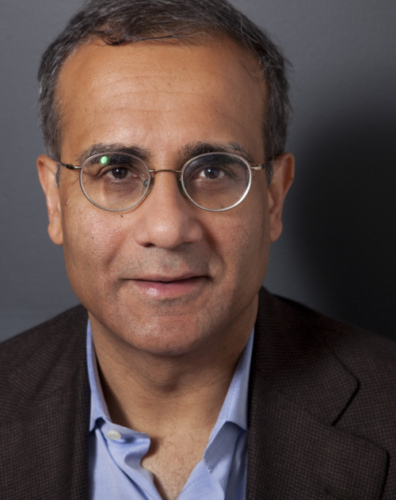
Welcome to another insightful episode of Build a Better Agency! In this thought-provoking conversation, host Drew McLellan welcomes acclaimed author, agency veteran, and thought leader Rishad Tobaccowala to the show. Together, they dig into the rapidly evolving nature of work and what it means for agency leaders and teams in the years ahead.
Rishad draws on his decades of agency experience and his latest book, “Rethinking Work,” to outline the powerful shifts transforming how, where, and why we work. With unmatched clarity, he breaks down the five key forces—ranging from technology and AI to shifting demographics and the post-COVID mindset—that are redrawing the boundaries between work and life. Rishad also challenges traditional agency norms by explaining why flexibility, purpose, and autonomy are now at the heart of attracting and retaining top talent.
Listeners will come away with fresh ideas for structuring their agency teams, from leveraging fractional and freelance talent to reimagining office space as dynamic hubs for creativity and collaboration. Rishad and Drew also tackle leadership evolution, with candid advice on moving from “boss zones” to genuine zones of influence that inspire trust and independence.
If you’re ready to shake off old models and embrace the future with optimism, this episode is a must-listen. By the end, you’ll be eager to reimagine your agency’s structure, ignite your creativity, and cultivate a workplace where both people and business can thrive in our new era of work.
A big thank you to our podcast’s presenting sponsor, White Label IQ. They’re an amazing resource for agencies who want to outsource their design, dev, or PPC work at wholesale prices. Check out their special offer (10 free hours!) for podcast listeners here.
What You Will Learn in This Episode:
-
- Why work is changing faster than ever—and how agencies can get ahead
- Shifting from “bosses” to leaders to attract and retain top talent
- Embracing a flexible workforce: full-time, freelance, fractional, and AI “employees”
- Redesigning office space to encourage purposeful, in-person collaboration
- Rethinking organizational structures—moving from rigid hierarchies to “jazz ensemble” models
- Leveraging AI and technology to boost revenue per employee and agility
- How agency owners can reimagine their business for resilience and future growth
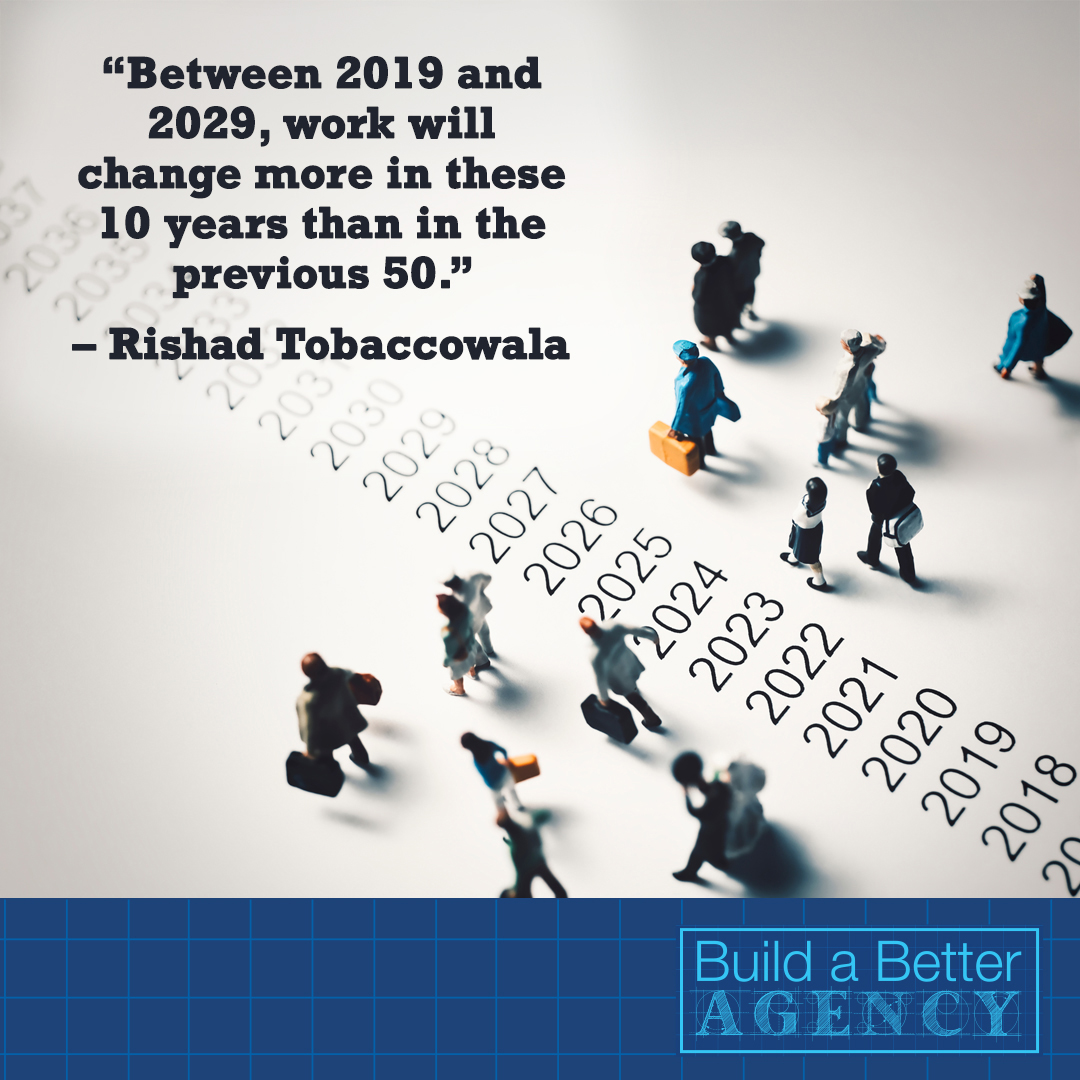
“Between 2019 and 2029, work will change more in these 10 years than in the previous 50.” - Rishad Tobaccowala Share on X
Meaningful work isn’t just a perk—it’s essential for a happy, healthy life. Rishad Tobaccowala shares what that means for agency leaders. Share on X
“Talent is the major cost.” Rishad Tobaccowala reveals why agencies should hire fewer but better-paid employees to thrive in the age of AI. Share on X
Offices aren’t vanishing—but their purpose is changing. Rishad Tobaccowala talks programming for interaction and earning the commute. Share on X
Six million new businesses are launching this year. Rishad Tobaccowala explains why small agencies are poised to win as power shifts from big to small. Share on X
Ways to contact Rishad:
- Website: https://rishadtobaccowala.com/
- Rethinking Work website & show: https://rethinkingwork.io/
- Substack: https://Rishad.substack.com/
- LinkedIn (Personal): https://www.linkedin.com/in/rishadtobaccowala/
Resources:
- Rishad’s Book: Rethinking Work
- Rishad’s Podcast: “What Next?” by Publicis Group
- BaBA Summit May 18-20, 2026: https://agencymanagementinstitute.com/babasummit/
- Drew’s Book: Sell With Authority
- AMI Facebook Group: https://www.facebook.com/agencymanagementinstitute
- AMI Preferred Partners: https://agencymanagementinstitute.com/ami-preferred-partners/
- Agency Edge Research Series: https://agencymanagementinstitute.com/agency-tools/agency-edge-research-series/
- Upcoming workshops: https://agencymanagementinstitute.com/advertising-agency-training/workshop-calendar/
- Weekly Newsletter: https://agencymanagementinstitute.com/newsletter-sign-up-form/
- Agency Coaching and Consulting: https://agencymanagementinstitute.com/advertising-agency-consulting/agency-coaching-consulting/
Drew McLellan [00:00:3
Hey everybody, Drew McLellan here, back with another episode of Build a Better Agency. Looking forward to spending the next hour with you. And you are going to be super glad you joined us for this conversation. I’m really excited about it. Before I tell you a little bit about our guest, I want to remind you that every month we are offering two free webinars. It’s the first and third Tuesday of every month. They are at 11am Mountain Live. You can attend them or you can get the recordings if you can’t attend live. But amazing guests all coming to teach us something new about how to do something inside of our agency. So it might be very technical like an SEO, it might be about brand, it might be about insights and research. So a wide variety of topics, but they’re absolutely free. They’re perfectly appropriate, not just for you, the owner or leader, but for the entire team. So you could schedule a lunch and learn around it it again. You could do it live if it works in your time zone, or you could use the recording. But we invite you to participate and soak in all of that knowledge. We have some great guests every every month and they are eager to teach you what they know. So please join us every first and third Tuesday of the month at 11:00am Mountain Time. Okay, so every once in a while I’ll read a book and as I’m reading the book, I’m taking notes and I’m thinking and one of the thoughts I on occasion have is, oh my gosh, I have to get this person on the podcast. So when I was reading Rishad Tobaccowala’s book, I was like, I have to have this man on the podcast. He is brilliant. He has an agency background. A lot of his examples come from our world. But it’s all about rethinking work and the data he provides in the book and the insights he provides and the wisdom that his thinking combined with what he has gathered together from a data point of view is really spectacular. It’s one of the most thought provoking books I have read in a really, really long time. So I am super excited to have him on the show today. I have seven hours of questions to ask him, so I know I won’t get through them all. But I will do my best to ask the questions that I think you would want to ask him because I think you’re going to find him as fascinating as I do. So let’s welcome him to the show. Rishad, welcome to the podcast. Thanks for joining us.
Rishad Tobaccowala [00:03:02]:
Thank you for having me.
Drew McLellan [00:03:03]:
Drew, I have to tell you, I have been really excited about this conversation when I read the book. I have probably 12 hours of questions for you that I’m going to try and pack into an hour, but the book was fascinating. So do me a favor and tell everybody a little bit about your background and how you came to write the book before I start peppering you with question.
Rishad Tobaccowala [00:03:22]:
Sure. So quick background I spent grew up in India, got a degree in math, got a business degree from the University of Chicago, worked for 37 years in a marketing services company called the Publicis Group, doing lots of different things. In the last five years, I was the chief strategist and growth officer of the company. And then I moved to Korea 2.0. I still remain an advisor to the group, but I moved to Korea 2.0 where I help people see, think and feel differently about how to grow themselves, their teams, and their business. And one of the ways I do it is through writing. And this book, Rethinking Work is my second book. I also write a substack, et cetera, which we’ll talk about at the very end. But the book Rethinking Work was written for the following reasons. One is I’ve come to understand that there are three key factors that keep people satisfied or happy with their lives. There’s a slight difference between happiness and satisfaction. But let’s say in that area, one of them is good relationships and another one is some modicum of good mental and physical health. And third is purposeful, meaningful, rewarding work.
Drew McLellan [00:04:49]:
So true.
Rishad Tobaccowala [00:04:51]:
And if you have those three, you’re more likely to be satisfied and happy than if one of those are missing in a big way. What also became very clear is that meaningful, purposeful, rewarding work is associated with living longer and better relationships. In effect, meaningful, purposeful, rewarding work is very important to the human condition.
Drew McLellan [00:05:13]:
Yeah, it is.
Rishad Tobaccowala [00:05:15]:
I also saw and believed that between 2019 and 2029 work would change more in these 10 years than in the previous 50. The thing that is singly most important to the human being is going to change, and no one’s talking about it. When people Talk about it. They talk about it for one reason. And this is the answering why? There are five reasons. There are more than five, but five broad reasons. The one that people talk about is the impact of COVID and where you work. While that is interesting, that isn’t even the most important thing that Covid actually did. So Covid is one of the five factors. But what Covid did is, yes, it made you wonder where you work, but more important, it made people wonder why they work and who they work for. And what we figured out were people were not only asking, should I go back to the office? But why am I reporting to this person? And how do I try to fit now work into my life versus fitting life into my work?
Drew McLellan [00:06:19]:
Yeah, huge shift.
Rishad Tobaccowala [00:06:21]:
Huge shift. But the other four factors are changing demographics, aging populations, declining populations, different mindsets, rise of technology, AI being one of them. Clearly new marketplaces, the ability for all of us to either get or sell our services around the world, whether it’s on Uber or Shopify or Etsy or Fiverr. And then that in many countries, including in the US in the next year or two, as many people will get a 1099, so they’ll have freelance work as they have full time work. In fact, globally 39% of people have non full time work. And so one of the fallacies is that work and jobs are the same thing. They’re not. You can basically have work without a job. And finally, obviously the impact of sort of COVID So those are the five factors.
Drew McLellan [00:07:21]:
So do you think, had Covid not happened, do you think we’d be having this conversation? So did Covid just accelerate the inevitable we or did Covid markedly change the direction we are going with work?
Rishad Tobaccowala [00:07:36]:
I think Covid primarily accelerated what was already happening.
Drew McLellan [00:07:42]:
Because of the other factors.
Rishad Tobaccowala [00:07:44]:
Because of the other factors. The first four factors were existing anyway. And my first book has two chapters in it, chapter two, which my first book keeps selling, it’s called Restoring the Soul of Business. Staying Human in the Age of Data. And people now read that as Staying Human in the Age of AI. The second chapter of that book talks about distributed work. And this book came out before COVID And the last chapter talks about AI. So these factors were already happening. So yes, it accelerated. It did have one shift though, and the shift was because most of us spent 18 to 24 months in our little cocoons. We began to rewire our brains, including as we saw people in the first year who we knew getting very sick or dying. We began to ask existential questions that happened because of COVID specifically, the rest of it, it just accelerated.
Drew McLellan [00:08:46]:
Yeah, yeah. It’s fascinating. So given all of that as we are, you know, small, you know, most of our listeners are what I would call small business owners. So they have under 300 employees and likely under 100 employees. How have all of these things changed differently for smaller companies versus, like, corporations or large organizations?
Rishad Tobaccowala [00:09:10]:
So my book, and it’s become very popular with small and medium businesses.
Drew McLellan [00:09:15]:
That’s a great book. Yeah.
Rishad Tobaccowala [00:09:16]:
Even though I worked in large companies, but many of the clients I had worked with small businesses because they were franchisees, affiliates, et cetera. So my book basically says that all these shifts are actually moving power from large to small and from capital to talent, and that in the future, most companies will be smaller companies and very few companies will be large companies. An indication of that is this year we are likely to see the opening of 6 million new businesses in America.
Drew McLellan [00:09:56]:
That’s crazy.
Rishad Tobaccowala [00:09:58]:
This is a record like never before. Okay, so part of what this new future of work has done is people have said, with the slight exception of this one problem, we have called healthcare in the United States every other thing. Basically, people are saying, hey, you know what? I can get the world’s best AI for $20 to $40 to $60. I can access anything I want using these modern marketplaces. Shopify, Etsy, Uber, whatever, Stripe. I can do all of that. I can take agency of my own career, and it’s clear that the social contract has broken and I can do my own thing. And if so, why don’t I work? Either start my own business or work for a small company. Because a small company, I know who the proprietors or owners are, whoever she or him are. I can get more agency to do things. I might share in the upside because it’s still small. So all these significantly benefit small companies. Because what now begins to happen is closeness to the customer, knowledge of the business and speed become important versus technology, capital and infrastructure.
Drew McLellan [00:11:17]:
Right. Because those now are commodities.
Rishad Tobaccowala [00:11:19]:
Those are commodities. So I remind people that when someone tells me that they’re a better company because they got advanced AI, I tell them two things. I don’t think any company’s got better advanced AI, unless you’re like Meta or Google or something like that. Because we all use the same 7 LLMs and we all have the same thing. But as importantly, do you go around saying that your business is better than another business because you got better electricity and AI is going to be like electricity? Yes. If you don’t have it, you won’t able to compete. But who do you compete with today that uses candlelight?
Drew McLellan [00:11:56]:
Right? Yeah. Really great analogy. So when we think about this idea of the 6 million businesses opening and people choosing to either hang up their own shingle or to work differently, how do we as, as agency owners, how this, this sort of this hybrid work model, and we’re already seeing it, you know, it used to be everybody who worked at an agency worked 40 hours a week, lived in the city where the agency was, went to the office every day, and you know, pre Covid and certainly post Covid, what our employee base looks like, where they live, how many hours they work, all of that is changing. So how do you see this fractional employment or project based teams, how do you see that working in practice for agencies who are largely all about talent?
Rishad Tobaccowala [00:12:47]:
Yes. So first I will make three points which will make you think that I’m very old school. And then I’m going to suddenly explain why that old school thinking requires new ways of working. Okay.
Drew McLellan [00:13:03]:
Okay.
Rishad Tobaccowala [00:13:03]:
So number one is I believe that in person interaction tends to be important.
Drew McLellan [00:13:09]:
Agreed. Totally agree. Yep.
Rishad Tobaccowala [00:13:12]:
Number two, since it’s true for every business, but if you claim to be the marketing business, different audiences have different needs, which means different strokes for different folks.
Drew McLellan [00:13:24]:
Yep.
Rishad Tobaccowala [00:13:25]:
Okay, that’s old school, which is in person interaction, different strokes for different. That’s traditional marketing. Right. And third is attracting and retaining talent is critical to every organization, particularly the agency businesses. So that’s about old school as you get. Right.
Drew McLellan [00:13:45]:
Yep.
Rishad Tobaccowala [00:13:46]:
Okay, now let me bust open. I believe those three and I believe in order to do those three, you have to no longer force people back into an office. Okay, here is why. Three reasons. First, what many companies do is they basically say we want to get everybody back into the office three to four days a week and because we need to get better in person interaction. So I said, okay, now we’ve broken rule number one, which is different strokes for different folks.
Drew McLellan [00:14:19]:
Right.
Rishad Tobaccowala [00:14:20]:
Okay. Depending on the job somebody is doing and their tenure, you may actually have different models. Now you can’t have one. So for instance, younger people, you may need them to be more in the office because they’re trained, are being trained. And younger people may want to be in the office because of the social aspects of it, as will often many of the most senior people. But middle aged people who have families and will live further because they need more space and may have aging parents or young kids to look after, that’s less attractive to come all the time to the office. So the fact that you Say you’re a marketing organization and then you have one size fits all. Makes no sense. Second is when somebody comes into the office, are you actually programming for interaction or are you programming for them to do exactly what they did at work? I mean, at home. But they do it in the office.
Drew McLellan [00:15:23]:
Right. That’s a big one. That’s a huge one.
Rishad Tobaccowala [00:15:26]:
So what are you doing to earn the commute?
Drew McLellan [00:15:29]:
Great.
Rishad Tobaccowala [00:15:29]:
Okay, so at the end of this show, I’ll talk about my book. I’ve also launched a new show called the Rethinking Work Show. It’s a free show, and this particular free show, which is the Rethinking Work show, one of my guests is a Harvard Business School professor who’s done research on distributed work. His book is called the World Is yous Office. You can work from anywhere. And he has shown three things. Number one, get this. Unless somebody is working 75ft from you, you are not going to meet them.
Drew McLellan [00:16:06]:
That’s crazy.
Rishad Tobaccowala [00:16:07]:
Okay? Yeah, because most people don’t. There’s no water coolers. People drink from water bottles. So this whole water cooler is total bullshit. So if they don’t work 75ft, it doesn’t happen. Second is when you force people into the office, everybody, you lose some of your best performers because they have options, and you tend to lose women.
Drew McLellan [00:16:34]:
Sure.
Rishad Tobaccowala [00:16:35]:
Okay. Third is in many cases, if you can get people three to four days a month, but you program those four days for interactions, concerts, brainstorming pitches. It’s much better than getting people just sitting there doing their office work. So you have to redesign your space. I actually have, on the Rethinking work show, a CEO of an agency, 100 person agency, who, when I was writing the book, heard me say, the offices of today will be like the whole horse and buggy in the Smithsonian. And it impacted him so much that he talked to me, and my book was still a year and a half away. He got out of his leases. They were up to. He changed the way he did his leases. He said, I’m not longer looking for leases. I’m looking for hospitality.
Drew McLellan [00:17:30]:
Interesting.
Rishad Tobaccowala [00:17:31]:
So he still had spaces, but he bought more expensive but smaller space. He redesigned the space so what was behind you, and the ceilings looked really great because you’d still be on, like perpetual selfie. Perpetual selfie. He became, in his category, the best place to work for for two years. And his business grew 15 to 20%. And people loved coming into the office. But he said, these are the. These are the days I’d like you to be there. But the rest of it, you can do what you want, but people would come in. So the idea basically is, yes, if you want in person interaction, make sure a, you don’t have one rule for everybody. Second is actually program for in person interaction. And third is manage your costs because a new agency coming up today will not have expensive real estate and force people to come into the office because it limits where you can get talent from. Yeah, right. So I always tell people who run businesses, if you were to start a business today with everything you know, would you design it the way you currently are? They said no. So I said, then why don’t you do the new thing? Because your competition doesn’t have this old stuff. Really what it is is space. Bringing people in is important, but you don’t need it that much. I think eventually for most companies, it’s three to four days a month is the maximum. Again, if you have a particular client, you have a particular thing. All those are exceptions. So is what we really have is a failure of leadership, not a failure of space. Because most people are still thinking they’re bosses with zones of control. And we’ve moved into an age of debossification where people want zones of influence.
Drew McLellan [00:19:20]:
I was just going to ask you about the whole debossification. Talk more about that.
Rishad Tobaccowala [00:19:25]:
One of the basic beliefs is this. When I did some research as to why people were resenting coming to the office, returning to the office, there were three reasons. Number three was the old stuff is it’s going to take a whole bunch of time, it’s going to cost an extra in daycare. I don’t know what the hell I’m doing. Number two is they did not like the way they were being mandated to return. Right. So the best way of describing it is the animals have left the cages in the zoo and now you’re whipping them back into the cages. And they don’t like that. But number one is they questioned who they were working for and they basically said I was doing perfectly well without this person hovering over me, checking in, controlling me. I just get the work done. In effect, they said, I’d like a leader, I don’t need a boss. I don’t need somebody to have a zone of control. Monitor, delegate, measure, micromanage, check in. I need somebody who can create, build, mentor, guide, help, inspire. So really, I tell a lot of people, people are not wanting not to come back to the office, they don’t want to come back to you.
Drew McLellan [00:20:54]:
Yeah, ouch. Right. So if somebody’s hearing you say that and they’re like, okay, they don’t want a boss, they want a leader. They don’t want somebody sort of micromanaging them.
Rishad Tobaccowala [00:21:08]:
Yeah, you need some manage. Yeah, you need some management, you need some leader, but very little bossing.
Drew McLellan [00:21:14]:
So how do I evolve from one to the other? What does that evolution look like for somebody who’s owned and run an agency for 20 years and been the boss?
Rishad Tobaccowala [00:21:25]:
So while they’ve been a boss, it doesn’t mean that they aren’t also a leader.
Drew McLellan [00:21:28]:
Right.
Rishad Tobaccowala [00:21:29]:
So my stuff is you suppress your boss like tendencies and increase your leader like tendencies. As someone who’s running a business or in a business, you have massive talent. So one of the interesting things in my book is while I say things that are provocative, I don’t say things that are disrespectful. So people read my book. I’m not basically saying, drew, you suck. No one’s going to listen to me. First of all, they’ll say, you suck. And then we’ll just go into that whole thing. So I say, hey, Drew, here’s the issue that you have is this way you’re behaving is less relevant than this way. And you can behave both ways. So up this down this for this reason. It doesn’t mean you have no bossing and no managing, otherwise you can’t run a company. But it’s that. So that’s the one thing do I say. The second one I basically sort of ask is pay a lot of attention, especially depending on how old you are, to how different the generations think about certain things. So if you’re younger, I’ll give you three facts about younger people which are very different than what most people think. The first one is younger people really want to work hard and they would like to get wealthy and they would like to have power just like we do. So it’s not like they don’t. They just don’t want to do it the way we did. So they don’t believe we made the right choices. Okay, that’s number one. Number two is many of us who are older are likely to believe in the system. They don’t believe in the system. So 66% of baby boomers believe in capitalism, only 22% of Gen Z believe in capitalism. And third is they don’t actually think like you because they have had a very different experience growing up, including three facts. I recently did a big presentation with MasterCard. So both MasterCard senior management and me did a presentation. The MasterCard folk put up a slide or Put up. They were going through a presentation. I’ll give you the three key takeaways from it. But they started the presentation because it was speaking to a bunch of bankers, older bankers. They said what we’re about to show you is based on millions and billions of Data points from MasterCard. But it is not a political statement. And here are the three things that I remind people. By the end of this decade, 40% of America’s wealth will be held by women. Because people think it’s going to go from baby boomers to Gen Z. Not before it goes through women. Because most men marry three years younger and women live three to four years older. So most there’ll be the seven years from the man dies to the money moving somewhere else. So women will control 40% of the wealth. And 51% of all new car purchases are made by women. Did anybody tell the dealers that? Because most women aren’t dealers. Right. The fifth largest economy in the world is the Hispanic population in the United states of which 82% were born in the United States. Every Gen Z is different from the other Gen Z. So there’s not like agency. But 49% of them identify as non Caucasian. You want to know why your business is weakening? You may not be actually talking to the audience of tomorrow or building your.
Drew McLellan [00:25:19]:
Business for the audience of tomorrow.
Rishad Tobaccowala [00:25:20]:
Of tomorrow. Right? Yeah. And my whole stuff is why? Because you’re hanging out with people like yourselves.
Drew McLellan [00:25:26]:
Right?
Rishad Tobaccowala [00:25:27]:
Right. So that’s one of the things that I basically say is listen, when you were young the world was different. Right. When these people grow up, the world will also be different. So this is not a behavior that we have. But as we get more successful we hang out with people like ourselves and we sometimes lose the plot.
Drew McLellan [00:25:47]:
Yeah, so true. So I want to take a quick break but when we come back I want you to talk a little bit about what you think the average agency’s employee base will look like. Full time, part time. Like what will that look like? So let’s take a quick break and then we’ll talk about as we think about the future and we’re thinking about where we work and how we work, who’s going to work with and for us. So let’s take a quick break and then we’ll, we’ll cover that. Are you tired of juggling multiple tools to manage your agency? Meet Dell Tech Workbook the all in one solution for marketing and communications agencies. Streamline your projects, resources and finances all in one place with real time dashboards and reporting. You’ll have full project visibility. You can plan team capacity weeks ahead to avoid bottlenecks and and keep your budgets on track to maximize profitability. It’s perfect for both agencies and in house marketing teams looking to work more efficiently. PCI is a certified Deltec Partner offering expert implementation and support to ensure your success. If you’re ready to transform your operations, visit PCI US Podcast for a free consultation today. Hey everybody, Just want to remind you before we get back to the show that we have a very engaged Facebook group. It’s a private group just for podcast listeners and agency owners that are in the AMI community. And to find it, if you’re not a member, head over to facebook.com groups b a bapodcast. So again, facebook.com groups bab podcast. All you have to do is answer a few questions to make sure that you are an actual agency owner or leader and we will let you right in. And you can join over 1700 other agency owners and leaders. And I’m telling you there’s probably 10 or 15 conversations that are started every day that are going to be of value to you. So come join us. All right, we are back and right before the break I was saying I’m curious your thoughts about what our workforce will look like and not so much demographically, but in terms of they will come to work. How again are they contractors? Are they full time employees? Are they part time? What is that? What is that composition do you think going to look like?
Rishad Tobaccowala [00:28:12]:
So I believe that most agencies will have five types of employees. They will continue to have full time employees, which is employees who are full time on the calendar. And those employees may work from anywhere, but they may be full time employees. They will have freelance employees as they have today, and they will have contract employees which are less prevalent in the agency business. But companies like Google, most of their employees are not Google employees. They’re contract employees from Accenture or some other place. But there’ll be two other types of employees. One will be a fractionalized employee. And a fractionalized employee is a person who has all the benefits of a full time employee but gets paid 60 or 80% of their salary if they work three or four days a week, but they have full health care. If there’s a bonus program, they get 60 to 80% of their bonus or 60% of equity investing. Why is that going to be important? Because a AI is going to make most jobs, 20% of most jobs disappear. And instead of laying off 20% of the people, you can actually give people the option of working 60 or 80% of the time. In most companies, if you ask people, some people want to work 100, some people want to work 80, some people want to work 60, most people want to work on average about 80%. So you could actually reduce the cost while actually making people get exactly what they want.
Drew McLellan [00:29:46]:
Interesting.
Rishad Tobaccowala [00:29:47]:
But as importantly, you’re going to try to attract and retain people who might be aging, who want to work a little bit less. You might be wanting to basically have people who want to go back to school, or people who have to get trained on AI, or people who say, I’d like to spend three days doing this, but a day or two doing a non competitive selling my sculptures on Etsy. That is the net. And then the last type of employee is aliens. And I’m not talking about immigrant aliens, but alien intelligence, which is the way I describe AI. So they’re going to be agents. So one of the people I interviewed on my Rethinking Work show is an Israeli company that for small and medium businesses have created and small and medium agencies have created agents for $500 a month who will do all your SEO, SEM optimization and social media.
Drew McLellan [00:30:42]:
It’s crazy.
Rishad Tobaccowala [00:30:43]:
Okay. And so you’re going to say, okay, I have agents, I fractionalized, I have contract, I have full time and I have freelance. And then based on your company’s strategy, your clients needs, your need to control costs and agility, you’ll combine them in different ways. You’re likely to have far less space than you have today. Far less space. And the new metric you’re going to measure is revenue per employee, not number of employees you have, but revenue per full employee.
Drew McLellan [00:31:16]:
That’s interesting because that’s one of the metrics we teach now in terms of being able to tell whether or not you can afford to add more people to the team. Is adjusted gross income per full time employee.
Rishad Tobaccowala [00:31:29]:
Yeah, that number will grow up. So last week, because my books turned out to be very popular. So in addition to students, I’m doing stuff with universities and I’m doing conferences around it. So I did a conference about the future of of work with Northwestern University in Chicago and we had lots of different speakers and I wrote about it in my write a substack which I’ll tell people about. It was called the Future of Work Less and more. Okay. And the biggest less. And the example I give is Microsoft today became the first $4 trillion company. Every number it has goes up to the right. Last week it laid off another 9,000 people. Satya Nadella Wrote a note saying the enigma of what’s going on. His basic belief is we are no longer going to be able to sell software. We’re going to sell engines so people can write their own software. Our business is different and we’re competing with new types of people. But my piece starts with AI native companies. So companies that are, obviously they’re tech, they’re not agencies, but they’re AI native.
Drew McLellan [00:32:40]:
Right.
Rishad Tobaccowala [00:32:41]:
They have now $2.5 million of revenue per employee.
Drew McLellan [00:32:46]:
That’s crazy.
Rishad Tobaccowala [00:32:47]:
The best agencies have $200,000 of revenue per employee to 200,000. So it’s 200,000 to versus 2.5 million. So what agencies will do, they’re not going to go to 2.5 million, but they’re going to use these AI alien life forms, new ways of working to take whatever they have up 30 or 40%. Which as an agency owner or an agency thing, imagine if you could take Your revenue up 30 to 40% without a major change in your cost structure. Yeah, right. And that’s the future of work. It’s not returning people to the office. It’s about reimagining your business.
Drew McLellan [00:33:27]:
It’s exciting. So all of that suggests that how our businesses are structured organizationally is also going to have to change.
Rishad Tobaccowala [00:33:37]:
Yes.
Drew McLellan [00:33:37]:
So how do you think that’s going to play out?
Rishad Tobaccowala [00:33:40]:
So the big shifts are the following. I think for most organizations, most of their talent will not work for the company, but will work outside the company. So that contractor, contractor, freelance alien agents, whatever it is. Okay, what is that? Second is that most of the work will be done outside versus inside. Third is companies that are ability to partner with other people will win over companies that cannot partner well with other people. So you’re going to have this sort of plug and play. Four is the model is going to be much more jazz versus classical. So current organizational structures are you have the boss or the leader, like the conductor and then okay, violence. You play now, right?
Drew McLellan [00:34:41]:
Yeah.
Rishad Tobaccowala [00:34:41]:
But if you think about jazz, it’s about improvisation. There’s a bad leader, but people play off each other. So organizational design will change significantly because many of what we have currently is a classical structure where most of the employees are full time. The work gets done inside the organization and it’ll be turned inside out.
Drew McLellan [00:35:04]:
So it’s an interesting thought given that what I hear a lot is that agencies struggle and it may be the organization creates this problem. Agencies struggle to get their people to think independently, to not just do what they’re told to do. So what do you think as an agency owner. If I have to go from orchestra leader, right, the conductor, to really putting together my jazz ensemble where everybody is playing off of each other, what can I do to encourage that sort of improvisation, that innovation, that thinking independently, that freedom and lack of fear to try new things like how do I create that kind of culture and environment?
Rishad Tobaccowala [00:35:51]:
So whenever you go from where you want to go to where you want to get to, you have to three things. You have to prune, you have to upgrade, and you have to buy. Okay, so some people are not fit for the future of your organization. And in as the most humane way possible, you have to see them out. The world’s worst thing is to actually keep people who are not going to help your company long after they should be gone. It doesn’t help you, it doesn’t help them. But obviously how you do it is very important. Of course, the second is you’re going to require new types of skills. But one of the things you want to hire is you want to hire people who’d like to work 60 to 80% of the time because they already are doing independent stuff and are thinking independently. They’re already entrepreneurs. So you hire entrepreneurs, but entrepreneurs would like to have healthcare. Entrepreneurs would like to have some stability of income, not all of it. So you get those people in. Does that make sense?
Drew McLellan [00:37:00]:
Yeah.
Rishad Tobaccowala [00:37:01]:
So I would go hire people who want to do other things and then I would encourage your existing people. You know what, I’m going to give you a budget for you to go figure out what your particular passion is and can you launch a little business around it?
Drew McLellan [00:37:16]:
Interesting.
Rishad Tobaccowala [00:37:17]:
Okay.
Drew McLellan [00:37:17]:
Create entrepreneurs.
Rishad Tobaccowala [00:37:19]:
Create entrepreneurs. Because here’s what happens is today you don’t have to. It’s like I was, I spent my entire working career in one large company. But if you look at my LinkedIn profile, it looks like I was changing my job every three years. And I launched five companies from scratch. So I was an intrapreneur. I was too scared to be a true entrepreneur. Right. But too weird to be a full time actual corporate person. And so I found the mix and I attracted the right people and the company like any leader has to have. Okay, I need some people like this and some people like this and some people like this. Right. So if everybody is like dallying around, you might not able to run the place. But if everybody is like one way, you may not be relevant in the future.
Drew McLellan [00:38:06]:
Yeah. So you’ve mentioned healthcare a couple times, so it makes me curious. Do you think how work will evolve is going to be different? In the United States versus the rest of the world where healthcare is not something that is provided by your employer.
Rishad Tobaccowala [00:38:22]:
Yeah. So right now the biggest issue in the US are that healthcare and retirement, non Social Security retirement, is connected to a job rather than being connected to work.
Drew McLellan [00:38:37]:
Yeah.
Rishad Tobaccowala [00:38:38]:
Okay.
Drew McLellan [00:38:39]:
Yeah.
Rishad Tobaccowala [00:38:39]:
And at some stage it has to be connected to work versus connected to a job. Because I would say, and I’m making this number up, the quote is from Thoreau, from Walden. He says many men live lives of quiet desperation.
Drew McLellan [00:39:00]:
Yeah.
Rishad Tobaccowala [00:39:01]:
Okay. I believe that one out of three people working in a company today are doing it only because they would like to launch their own stuff, but they can’t get healthcare. Okay.
Drew McLellan [00:39:14]:
That’s sad.
Rishad Tobaccowala [00:39:15]:
Yeah. Because a lot of people, like, I’ll give you an idea, like I, I loved what I did and, but because of a variety of reasons, I knew that at 55 I would be grandfathered into healthcare for my company till Medicare started.
Drew McLellan [00:39:30]:
Yeah.
Rishad Tobaccowala [00:39:31]:
So immediately at 55 I said, what else can I do? I didn’t leave for another five years, but my whole stuff was, now I have much more options.
Drew McLellan [00:39:39]:
Right. I’m free to do other things. Right.
Rishad Tobaccowala [00:39:42]:
And because I had much more options and was thinking about it, I felt freer so I could keep up with some of the challenges at work. I didn’t feel trapped. Does that make sense? So I tell people, the more options you give your employees, the more likely is that they will stay.
Drew McLellan [00:39:57]:
Makes perfect sense.
Rishad Tobaccowala [00:39:58]:
And so the thing with healthcare is, I think the US is going to have to fix it because right now we know that the system doesn’t work because healthcare is okay, but we spend three times more than most countries and the people who are underwriting. This is the world of business. If you ask people in business, one of the key things is they have to pay a whole bunch of money for healthcare.
Drew McLellan [00:40:25]:
Yeah. It’s astronomical.
Rishad Tobaccowala [00:40:26]:
And for, for larger companies, but not for smaller companies, but for larger companies. Some of the larger companies self insure. I don’t think small companies know that. And so when two or three of their senior people or someone gets sick with cancer and they need million, $2 million, it shows up in their earnings.
Drew McLellan [00:40:45]:
Right.
Rishad Tobaccowala [00:40:46]:
So literally these companies, instead of being in the product of agencies, are now a product of health care that has to be disconnected. But right now the only thing I can say is it’s the reason why I’m a big believer in fractionalized employment. So you can get healthcare if you work 60 to 80%.
Drew McLellan [00:41:05]:
Right. You still qualify. Right.
Rishad Tobaccowala [00:41:07]:
You still qualify for healthcare from your company and you can do other things and your company gets the best of both worlds. They get you, but at a reduced cost. They get an entrepreneur also with the whole thing. And so the chapter called Fractionalized Employees is being used by a lot of people. And there’s nothing that prevents any agency from creating a fractionalized employee that doesn’t require new health care rules.
Drew McLellan [00:41:31]:
Right. So for our listeners outside of the US this all becomes more accelerated.
Rishad Tobaccowala [00:41:38]:
It becomes much more accelerated.
Drew McLellan [00:41:39]:
The reality of your book can be their reality faster because they don’t. Because they don’t have that. Yeah.
Rishad Tobaccowala [00:41:47]:
So the thing that the reality of my book that becomes much faster for them is the fractionalized employment. The rest of my book is happening everywhere, in some cases happening faster in the US because there are certain things in the US that it’s a better off society. So we can afford AI faster. We have better access to different marketplaces where we can sell and things like that. So some places the US will be ahead, some places Europe and Asia will be ahead. But it’s moving really, really rapidly. And the thing I always tell managers and agencies is this is actually one of the best times to be an agency, because everyone talks about being creative. Imagine you’re going to be playing with the creation you have. Everything is open. You can now create a new type of agency.
Drew McLellan [00:42:39]:
Right.
Rishad Tobaccowala [00:42:40]:
So if you’re a creative person, go ahead now show us what we can do.
Drew McLellan [00:42:44]:
So if you were given your history of working in agencies, if you were going to create an agency today, that would be the model that everybody wished they had created by 2030, what would it look like?
Rishad Tobaccowala [00:42:58]:
So obviously this will differ based on country, what I’m trying to do, what type of clients, there’ll be modifications. But with that being said, I think these would be some of the principles I’d have. I would basically hire fewer people, but I would pay them 30 to 50% more than what the market is paying. In effect, I would get better people because I believe technology allows better people to scale really well. Okay. So I always basically say that technology is like a leverage, but if you’ve got real capability and you’ve got this lever, if I’m playing with against Serena Williams and both of us are using yesterday’s rackets, she would beat me. And if we suddenly move to today’s rackets, she would beat me even more.
Drew McLellan [00:43:54]:
Yeah, right.
Rishad Tobaccowala [00:43:55]:
Because as she gets better technology, this difference matters. So I would basically place a premium on getting the best talent. That’s number one. Okay, I pay more, but I’D hire fewer people. So that’s the first thing I do, because talent is the major cost. Okay. The second cost is I would have space, whether it’s wework or regular space. Ideally regular space, but much less. But I would design it like I was designing a concert, live concert. And I’d keep it open to every other person. So basically I’d have less square footage but in a better area. So people will more want to come to it.
Drew McLellan [00:44:38]:
Sure.
Rishad Tobaccowala [00:44:38]:
And I would open it up to other people in my building or things that would be like buzzing. So it’d be more like a bazaar than an office. Okay. But I would have a space because space also makes for this in person interaction, et cetera. But I have less space, but my budgets would be changed. The third thing that I would basically do is I would massively, massively rethink my entire business, assuming that it’s AI first. So I wouldn’t add AI to me, I would rethink my business. So what does that mean? A lot of businesses today, including agencies, are going to say, how do I use AI to make my process more efficient or effective? That’s important. But imagine if the New York Times, when the digital world came around, did what every other newspaper did, which is how do I make digital to make my printing presses work better and my trucks move around faster and schedule better page one meetings, when the actual thing wasn’t efficiency and effectiveness, it was existential threats and existential opportunities. And they quickly figured out, and I was part of the team, that they were not in the printing business, the truck business, or even the page one business. And maybe they were not even in the news business. 30% of their revenue is not news. And so part of it is, okay, what business are we in? Which is kind of very interesting. And in addition to making our current business more efficient and effective, if we were launching a business altogether from scratch, what would it look like? So those were the things I would do today.
Drew McLellan [00:46:22]:
I like it. So as agency owners are, so it’s an interesting time. A lot of agency owners came out of COVID and right into, you know, the great resignation and all the challenges that we’ve had post Covid. And now AI is here. And so I see a shift. So some agency owners are like, they’re fatigued. This is exhausting, all of this change. And other people are, I get to reinvent everything. And they’re super excited. If I’m in the I’m kind of exhausted stage, what could or should I do to reignite the fire to really re. Relook at how incredible the opportunity is to rethink about to do it. Basically, what you said is reinvent my business and my opportunity. Where would you find inspiration? If you were on the fatigue side, which obviously you are not. If you were on the fatigue side, what would you do to refill your bucket and get that optimism and enthusiasm? Because your book is very optimistic about the future.
Rishad Tobaccowala [00:47:26]:
So what basically happens is the only pushback I’ve got on my book, interestingly, people love it, but a certain group of people say, how can you be so optimistic and realistic at the same time? And I said, because I’m pragmatically enthusiastic. I’m protopian. I’m not either utopian or dystopian. And I believe that if you look back every 10, 20, 30 years, things always tend to get better. Right. Always the doubt. So with that being said, I will give you give the listeners two exercises and one mindset that they could do right away. So the two exercises are get some of your senior most people or some talented people. Doesn’t really senior people take them out to dinner or lunch? And I suggest this, but I’m not necessarily suggesting everybody has to do it. Have some alcohol, okay, whatever. Chill out.
Drew McLellan [00:48:21]:
They’re agency people. So there’s going to be alcohol, right?
Rishad Tobaccowala [00:48:24]:
And then basically say, let me identify a problem or solution. A problem that I have or an opportunity, and how would I go after it? If I had all the assets of my company, all the people of my company, all my partnerships to go after this, but with no constraints, accepting 3A, whatever I do has to be legal, whatever I do has to be scientifically possible, and whatever I do has to break even in a year or less.
Drew McLellan [00:48:57]:
Interesting.
Rishad Tobaccowala [00:48:58]:
What would I do? Okay, you will come up with amazing, amazing ideas. And then I’d say, why aren’t you doing that? So that’s one exercise. Another exercise, after you’ve had another drink, is you basically say that Richard and Drew company absolutely suck. Let’s put them out of business. So Richard and Drew decide how to destroy the Richard and Drew company. So instead of defending, go into attack mode.
Drew McLellan [00:49:26]:
Interesting.
Rishad Tobaccowala [00:49:27]:
Attack yourself. It’s really fun. Break it down. Destroy yourself. And when you do that, you’ll figure out how easy it is to destroy yourself. But you also find, oh, my God, I figured out my weaknesses. Now I know what to do. Yeah, okay, those are two exercises and this mindset. And again, this is not a political statement, but the mindset is think like an immigrant. Okay, so what do I mean by that all of us are immigrating to a new country called the future. We’re all immigrating into the future. So what do immigrants who are successful do? They think like outsiders. They challenge the status quo. They think like underdogs. So when somebody says I have a castle with a moat around it, I say, you have a castle and I have a source of water with which I will flood you out of your castle. Right?
Drew McLellan [00:50:26]:
Yeah.
Rishad Tobaccowala [00:50:27]:
And third is I’m willing to take short term pain for long term gain. Yeah, right. Think like an immigrant because we’re all immigrating into the future. So that’s the mindset.
Drew McLellan [00:50:39]:
Love it.
Rishad Tobaccowala [00:50:39]:
And everybody can do those two exercises in that mindset.
Drew McLellan [00:50:43]:
This has been fascinating. Like I said, I barely scratched the surface of my question. So we’ll have to have you back. But in the meantime, tell everybody how they can keep learning from you. Substack and all the other ways.
Rishad Tobaccowala [00:50:55]:
So the three sources and everything I’m going to suggest is 100% free. So it’s free of subscription. No advertising even though I was in the business. No email marketing, harvesting, nothing. The only email marketing is if you sign up on the substack which that vishad.substack.com 30,000 people read it every Sunday. You’ll get a piece from me every Sunday on different topics. I have a podcast called what next? Which you can type and find as what Next Publicist Group. That’s my old place of work produces this but it’s mine where I talk to a leader in different fields, not just advertising about what’s in the future. So I just Most recently the world of advertising spoke to Sir John Hegarty of BBDH Will creativity survive in an AI age? And it was amazing. And he also defined creativity in a good way. And there are 150 of those all completely free which you can find on any platform you use. Spotify, Apple, whatever you want. The third is eight weeks ago I launched at rethinkingwork IO which is my site which is also about my book, lots of conversations a rethinking work show which is also on YouTube, podcasts, et cetera where I talk to a different person inventing the future of work including three people of the first first two of the first eight coming soon are a lot of other people in the agency space. So what is a new type of agency that combines full time with part time using an operating system? One is the CEO of this agency who redesigned his entire space 100% company and how we did it. So you’ll have life stories, everything completely free.
Drew McLellan [00:52:33]:
Awesome. This has been a fascinating conversation, and your book is so thought provoking and so optimistic. When I finished reading it, I couldn’t wait to reinvent, which is really inspiring. So I’m super grateful for you being on the show, but also for you just sharing the way you think and how we should all start thinking.
Rishad Tobaccowala [00:52:57]:
Well, Drew, thank you for inviting me. Thank you for supporting the book. Hopefully a few more people will go buy it, but the book’s really useful for people. And when you buy it, I get three bucks. All the rest of my stuff is free. You don’t have to buy it, but it keeps me in business with HarperCollins.
Drew McLellan [00:53:11]:
There you go. All right. We will definitely talk about having you back. Thank you.
Rishad Tobaccowala [00:53:16]:
Thank you so much. Thank you very much. You bet.
Drew McLellan [00:53:18]:
All right, you guys. So homework from this episode. So first of all, those exercises sound like a blast. I’m already making my guest list of how I’m going to buy people some dinner, buy people some drinks, and think differently about how. How am I can show up in the world. I don’t think it’s just agencies. I think it’s folks like us, too. So you have homework to do. And I and I challenge you to invite some people who don’t really understand what you do. Like, get some different thinkers. Right? You have lots of people in your world that are interesting thinkers and creators and entrepreneurs. And so make sure that that table is filled with interesting thinkers and go do the homework. Great book. And really, this is a book you want to read. And this is probably a book. It would be fascinating to read it with your leadership team and just talk about how you together can think about reinventing the agency. And I think your employees would have a lot to say about it, how they want to help you reinvent the future of your business. So don’t. This is not a monologue. I think this is a dialogue that you can have with lots of people in your world. So please, please, please make the effort to do that. Want to make sure? I thank our friends at White Label iq. You know, they’re the presenting sponsor and you know, they actually, this is how they came to be is they there was a problem and they needed to invent a future that did not exist back when they started. And now today they serve hundreds of agencies all over the world by being their White label partner for design, dev and ppc. So they’re a great model, actually, of this sort of future thinking. So head over to whitelabeliq.comami to learn more about how they could serve you and your team. They are a great example of what Rishad is talking about about that partner, that outside partner who brings a fresh perspective into your business. And you know what? I love these conversations. I love I love doing the homework. I love reading the books. I love meeting the authors. I love having these conversations. And so I’m going to come back next week with another guest and I hope you will join me so I will see you then. In the meantime, have a great week. Enjoy getting excited about thinking about the future. I think we have some great things to do together and I’m looking forward to it. I hope you are too. I’ll see you next week.