
Episode 537
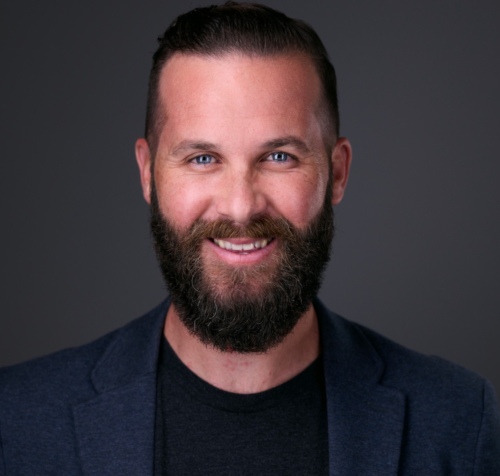
Welcome to another compelling episode of Build a Better Agency! This week, host Drew McLellan sits down with special guest Brett Farmiloe, a former agency owner turned SaaS entrepreneur, to unpack the evolving world of PR and media in the age of AI. Together, they dive into the complexities and opportunities that the rapid adoption of AI presents for agencies, especially those aiming to maintain authentic, high-value relationships with journalists and media outlets.
In this insightful conversation, Brett Farmiloe shares the unique vantage point gained from his time building and selling a marketing agency, now channeled into his role as the founder and CEO of Featured.com and the current owner of the iconic HARO (Help a Reporter Out) platform. He reveals how both tools are being reimagined to adapt to today’s media demands—where automation intersects with the irreplaceable value of human expertise. Agencies will gain an inside look at how AI is reshaping the process of matching experts with media opportunities, the crucial role of maintaining human oversight, and strategies for keeping quality and trust at the forefront in a flood of AI-generated content.
Throughout the episode, Drew McLellan and Brett Farmiloe tackle the questions on every agency leader’s mind: How can we use AI as an asset, not a crutch? What do journalists expect from agency sources in a world where the line between authentic insight and machine-generated text is increasingly blurred? And what are the best practices for pitching and building real relationships in this new landscape? You’ll hear practical strategies, real-world examples, and honest perspectives on keeping your agency—and your clients—ahead of the curve.
Don’t miss this episode if you’re ready to rethink PR for your agency, streamline your workflows with SaaS-inspired thinking, and learn how to create more value for your clients in a changing media environment. With actionable takeaways on automation, self-service value, and trust building, this discussion is packed with ideas to help you future-proof your agency’s PR and client service strategies.
A big thank you to our podcast’s presenting sponsor, White Label IQ. They’re an amazing resource for agencies who want to outsource their design, dev, or PPC work at wholesale prices. Check out their special offer (10 free hours!) for podcast listeners here.
What You Will Learn in This Episode:
-
- How AI is reshaping PR and media relations for agencies
- The ongoing importance of human expertise in “human-in-the-loop” PR
- Maintaining trust and quality when using AI-generated pitches
- Reviving and modernizing HARO to better connect journalists and sources
- What agencies can learn from SaaS to increase efficiency and value
- How journalists are adapting to AI, multiple income streams, and new media channels
- New opportunities for agencies in proactive PR and as AI consultants for clients
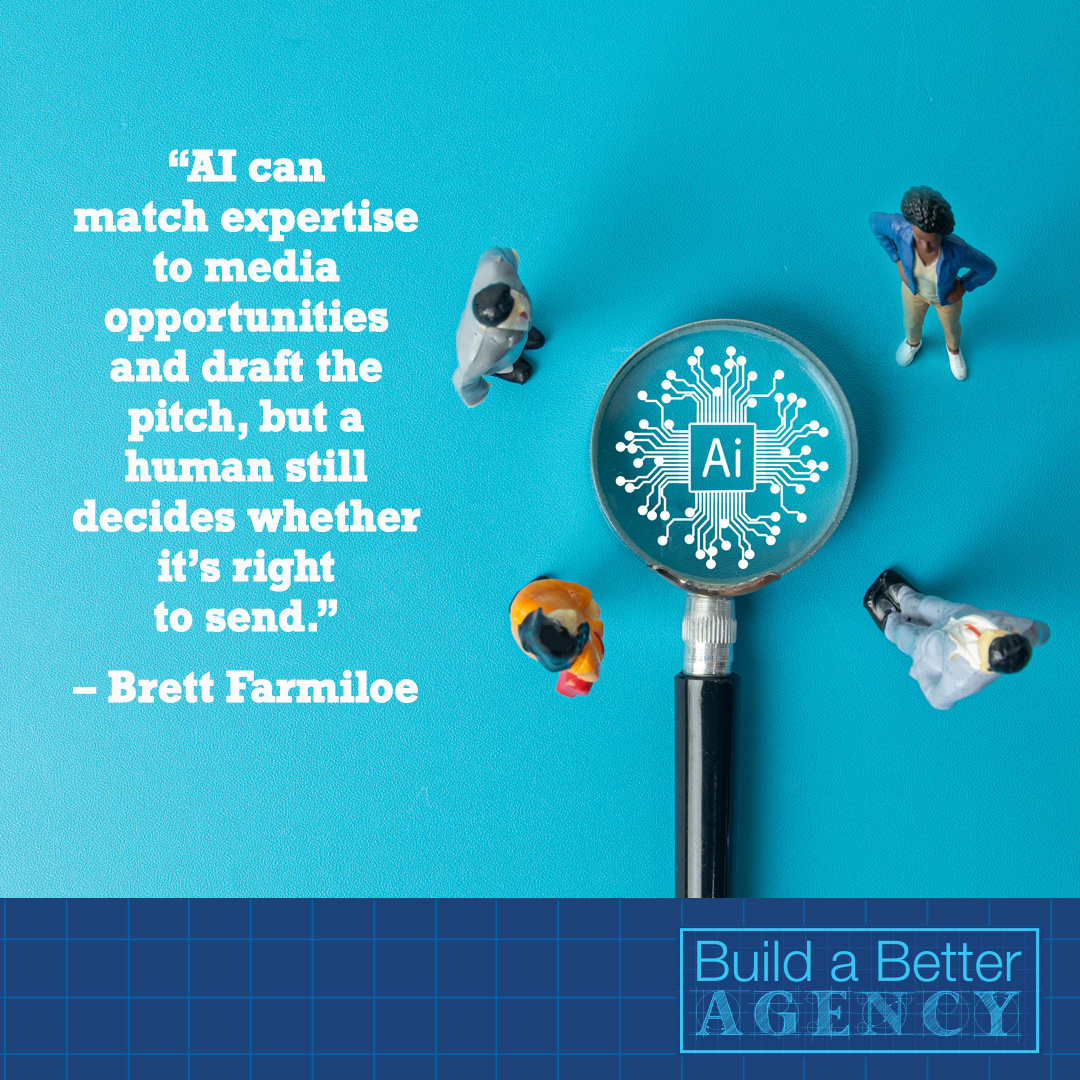
“AI can match expertise to media opportunities and draft the pitch, but a human still decides whether it’s right to send.” - Brett Farmiloe Share on X
AI agents are on the horizon for agencies. Brett Farmiloe shares how embracing automation now can prepare firms for the next leap forward in marketing services. Share on X
Reactive or proactive PR? Brett Farmiloe explains how agencies can use tools like HARO not just for media wins, but for smarter client insights and future trend spotting. Share on X
AI is changing the PR game, but Brett Farmiloe says agencies still need humans to keep things real and trustworthy. Share on X
Keeping client trust is tough whether you’re running an agency or a SaaS. Brett Farmiloe talks about why it all comes down to delivering real value. Share on X
Ways to contact Brett:
- LinkedIn: https://www.linkedin.com/in/brettfarmiloe/
- Website: https://featured.com/
Resources:
- Help a Reporter Out (HARO): https://www.helpareporter.com/
- BaBA Summit May 18-20, 2026: https://agencymanagementinstitute.com/babasummit/
- Drew’s Book: Sell With Authority
- AMI Facebook Group: https://www.facebook.com/agencymanagementinstitute
- AMI Preferred Partners: https://agencymanagementinstitute.com/ami-preferred-partners/
- Agency Edge Research Series: https://agencymanagementinstitute.com/agency-tools/agency-edge-research-series/
- Upcoming workshops: https://agencymanagementinstitute.com/advertising-agency-training/workshop-calendar/
- Weekly Newsletter: https://agencymanagementinstitute.com/newsletter-sign-up-form/
- Agency Coaching and Consulting: https://agencymanagementinstitute.com/advertising-agency-consulting/agency-coaching-consulting/
Danyel McLellan [00:00:01]:
Running an agency can be a lonely proposition, but it doesn’t have to be. We can learn how to be better faster if we learn together. Welcome to Agency Management Institute’s Build a Better Agency podcast presented by White Label iq. Tune in every week for insights on how small to mid sized agencies are surviving and thriving in today’s market. With 25 plus years of experience as both an agency owner and agency consultant, please welcome, welcome your host, Drew Mclellan.
Drew McLellan [00:00:37]:
Hey everybody, Drew McLellan here from agency Management Institute, back again to talk about how to do it a little better as agency owners and leaders. And I’m super excited for this episode. I think you’re going to find it really fascinating. So my guest is a former agency owner who has now pivoted and today we’re going to talk about how PR is sort of evolving in the world of AI and how it really is still relevant and, and how we as agencies can sort of wrap our arms around sort of the new version of what PR is. And so one of the cool things about our guest again is he understands your world because he used to own an agency. And that’s actually one of the things that I like about our presenting sponsor, White Label IQ as well is that they come out of an agency, they’ve sat in your chair, they know what it’s like to have a client breathing down your neck. And, and they’ve built their business because they lived in that same pain and they needed to find a solution and they couldn’t find it, so they built it. So today they work with agencies all over the world, helping them with design, dev and paid media. So when you talk to them, you don’t have to explain what’s going on in your world. You don’t have to explain the price pressures you have. You don’t have to explain sort of that you don’t have all the information you need from a client because the client hasn’t been as forthcoming as you want. Because they get it because they live it every day and they have lived it for years. So check them [email protected] ami and learn more about their business. Learn about the special offer they have for you if you’ve never worked with them before. And of course, take a minute and thank them for being a sponsor. All right, so Brett Farmalo is our guest today and for many of you have been in the business for a while, you have known about Haro, help a reporter out and that’s gone through several ownership evolutions. And, and Brett is actually the owner of that company today. And so we’re going to learn about how that came to be and how through that lens, he’s seeing how PR is changing for agencies and for our clients. So, all right, let’s welcome him to the show. Brett, welcome to the show. Thanks for joining us.
Brett Farmiloe [00:02:46]:
Yeah, thanks for having me.
Drew McLellan [00:02:47]:
So give everybody a little bit of sense of your background and how you came to be doing the work that you’re doing today.
Brett Farmiloe [00:02:54]:
Yeah. So I ran a marketing agency for 10 years and had no intention to run an agency or build a company. I got our website to rank on page one for the term digital marketing company and then started a digital marketing company. And so we service more than 500 small business clients over the course of those 10 years. I sold it at the end of 2021 to focus full time on Featured.com which is a platform that connects journalists and publishers with expert sources for stories. And so basically, that platform solved the biggest problem that I had at the agency, which is how do you build visibility for these small business clients? They have an abundance of knowledge to share, know where to share it, and so we created a platform to do that. So that’s last 15 years in a nutshell.
Drew McLellan [00:03:39]:
And so today, what are you doing?
Brett Farmiloe [00:03:42]:
Today? I am this founder CEO of future.com we also acquired and revived a platform called Help Reporter out, or Haro. And and so I also manage and oversee the revival of that platform. And all we’re focused on is connecting journalists with experts so that they have quality insights for stories and so that experts get exposure in exchange for sharing their knowledge. So that’s our full focus.
Drew McLellan [00:04:09]:
And so how do the two businesses interact or do they not.
Brett Farmiloe [00:04:13]:
They interact. They’re two separate standalone brands. And the interaction is that Haro is a three times a day email newsletter. And so it goes out morning, afternoon and evening. And the problem with Haro is that there’s a gap between when we get a request and when that request actually goes out to the network. And so the interaction is as soon as a Haro query is approved, it’ll go live on Featured instantly. That way, featured users are able to get early access to Haro queries, Journalists are able to start receiving pitches as soon as they place that request. That’s the interaction.
Drew McLellan [00:04:50]:
Yeah. Okay, interesting. I mean, Haro’s been around forever and it’s. I know. It’s gone through several different owners. And so what, what, when you created Featured, what made you decide that buying Haro as well made sense? How was that decision made?
Brett Farmiloe [00:05:05]:
Yeah, I think that you know, Featured is a freemium B2B SaaS, meaning that anyone can answer up to three questions a month at no cost, and then our subscriptions allow you to answer more than that. And so as a business, we’re always thinking about how do we get more media opportunities in front of our audience. And so when HARO essentially was announced that it was going to be discontinued, it made a lot of sense to acquire and revive that platform so that there’s more opportunities available to our customers. And that was a primary motivator for it. And also it was just like what I underestimated in this is how beloved the brand was and how many people had a positive interaction with help a reporter out at some point, whether you’re a journalist and a bind, or if you’re a business owner or an agency that’s looking to get placed in media. So reviving the brand overall seemed like a pretty smart move for the company.
Drew McLellan [00:05:57]:
Yeah, yeah, I think it was a beloved brand for sure. I mean, and when you think about it back in the day, you know, pre AI and all of that, I mean, it was, it was a huge opportunity for people to be found and to be sort of seen and cited as an expert. So I know that back in the day when I was active in my agency, same thing, we used it a lot for clients because it was just a great way to get their name out there.
Brett Farmiloe [00:06:23]:
Totally. And it’s crazy how what was the origination of it in 2008 of just a simple connection between a journalist and a source via email works still in 2025. And the difference is that, you know, you’ve got the emergence of AI and it’s much easier to monitor these, these opportunities and respond to these opportunities. And it makes it much more difficult for us as a platform to, to operate where you need to keep quality and trust the core to make it work. And so we’ve had to. Since reviving it six months ago, all of our investment and time and focus has been around maintaining that quality and Trust, because about 21% of all pitches that we see on HARO are 100% AI generated. And so it’s, it’s basically giving journalists the tools to fil those queries if they decide to. It’s equipping them with transparency so that every single pitch on HARO is AI detection scored. So that’s made transparent to the journalists to essentially see what the sources are doing on that side. So it’s been a, it’s been a journey and it’s, it’s A very different platform while it’s still the same platform for, for users.
Drew McLellan [00:07:31]:
Yeah. AI has got to complicate the heck out of that.
Brett Farmiloe [00:07:34]:
I have to think it was basically just like, I think that’s how it ended up in our hands was, was the amount of focus and resources that need to be dev committed to making sure that Harris a success is, is quite a bit. And you know, we, we raised our hand and we said we’re willing to, to take the challenge because it’s worth reviving. And yeah, so it’s, we’ve learned a lot in, in the last six months.
Drew McLellan [00:07:58]:
So as you think about, I mean, you know, obviously the, the hot topic on everybody’s mind is how is AI changing fill in the blank, whatever the fill in the blank is. And so it sounds like it’s obviously changed the HARO product. From an agency perspective and from a subject matter experts perspective, how do you, from your lens sort of see how AI is changing the landscape?
Brett Farmiloe [00:08:23]:
I think that it’s human in the loop, everything. So human in the loop, pr, human in the loop, content creation, human in the loop, technical SEO, human in the loop, whatever, fill in the blank. And the smart agencies, companies are essentially automating a lot of those different processes and steps that were previously done manually by someone at the company. And then ultimately through that AI automation, it’s coming to someone who is an expert who knows what’s right from wrong and making the determinations on how to proceed from there. And so what I mean by that, and just to give a concrete example of this, is how do you identify the right media opportunities and how do you draft a suggested response to the journalist? And so traditionally back, if you were to go all the way back with, with Harrow’s beginnings, this is someone who’s getting the email every single day, looking through the emails, deciding which client might be relevant, going to the client with the suggested draft, writing it all up, getting it approved and then submitting it to the journalist. Today, what that looks like is you’ll have AI that’s essentially well equipped and trained on who your clients are, what they’re knowledgeable about. AI is making that match between that knowledge base and a relevant media opportunity and then drafting a suggested pitch that then is reviewed by the human in the loop, whether that’s the agency or the client or both, before it’s actually submitted. And so I think that that’s the smart efficiency gain that a lot of agencies are experiencing where you’re putting AI to work. And the best ones are not fully automating with AI, they’re keeping the human in the loop so that it’s an efficient process.
Drew McLellan [00:10:12]:
How do you think journalists feel about all of this? I mean, it’s got to be, first of all, there are fewer of them. They’re stretched thin. You know, how do you suppose they are feeling about their sources being sort of AI generated or AI aided at the very least?
Brett Farmiloe [00:10:31]:
I think that there’s two camps. There’s the camp that is very adamantly opposed to it, and there’s the camp that doesn’t care. I’ll talk about the camp that doesn’t care as much because that camp is concerned about getting connected with the right source for their story. And their job is to do that and then take it one level above that to get the right information. So if that AI assisted pitch comes to their inbox and it’s exactly the right source that they need to talk to, the journalist’s job is to go talk to them, right?
Drew McLellan [00:11:03]:
Yeah. They don’t care how it came to them.
Brett Farmiloe [00:11:04]:
Yeah, they’re not necessarily copying and pasting and putting it into their story and putting themselves at risk from their editor who’s going to come back and say, hey, did you talk with this person? Like, did you verify that they’re real, that they said this thing? You know, So I think that there’s the camp that is looking at AI as a more efficient way to get connected with the person that they need for their story. And then there’s others who, you know, just don’t like AI assisted, you know, stuff. And so I think that us, as a platform, it’s appeasing both audiences and giving them the tools that allow them to say, here’s the experience that I want to have. I don’t want any AI in this. I’m going to check a box or hey, I don’t really care. I’m going to get connected with the right source faster. And please send whatever you have my way.
Drew McLellan [00:11:50]:
Yeah, interesting. From the agency side, how do you, you know, you think about a PR firm and, you know, PR firms, especially with media, has always been about relationship cultivation and all of that. So how do you see. How do you see agencies either using Arrow or otherwise, how do you see them sort of figuring out how to navigate this sort of new world where at the end of the day, it’s still about relationship, it’s still about expertise, but now you’ve got all of these tools kind of in the middle, good or bad, but you have all these tools that are sort of automating parts of that relationship process. So what are you seeing as sort of best practices from some of the folks who are using your tools in terms of still maintaining that transparency, creating that relationship, but doing it in a AI efficient world?
Brett Farmiloe [00:12:43]:
Yeah, I think that the key part of what you just said is a lot of tools. There’s a lot of stuff out there because it’s very easy to launch these days and so there are a lot of tools. So I think that it’s, you know, first of all getting very selective about which tools that you’re using and then, and then investing in those tools. So by investing in those tools, that’s not a money spend, it’s more so the inputs that you’re putting into those tools so they can work efficiently for you. And so one tool, you know, just to give a shout out to a new feature that we launched recently called Featured AI, how that works is you essentially form a knowledge base for your client or for a profile. And then you could essentially use that knowledge base which consists of articles that you’ve written, answers that you’ve had, pitches that you’ve made to journalists, so that the AI trains on that to know what to identify. And then you could essentially set your guidance settings so that you’re saying, hey, I only want to monitor queries from media outlets with a domain authority of 50 or above and try to filter in that way. And then when you get connected with the right opportunity, then it’s just deciding whether or not to take action on it. And I think that’s where agencies are really good is today agencies have the right and expert level judgment on whether or not to pursue an opportunity, whether or not that journalist is someone that you want to develop a relationship with and whether, you know, one thing that I’ve heard often from PR firms is like, hey, that journalist typically writes negatively about a certain, you know, certain trends. We don’t want to engage with that, certain journalists. So I think that that’s where agencies and human in the loop really like comes to light is yes, you can have these tools that you could automate to do a lot of the relationship monitoring, but when it comes to the relationship building, that’s where agencies shine.
Drew McLellan [00:14:33]:
Yeah, yeah, yeah, that’s, that’s where the human is not human involved or human in the loop, but now it’s human led. Right?
Brett Farmiloe [00:14:40]:
Yeah. And you just look at like the, you know, your LinkedIn newsfeed of how much content and that is, that is appearing in there and like no one has time to go through every single update. But what if you did. What if AI was able to monitor your network and really detect the stuff that’s important and then alert you when there are notable events from people within your network that you could develop better relationships with. So I think that that’s like, one example of how the power that’s emerging here in 2025, it’s kind of crazy.
Drew McLellan [00:15:10]:
How fast it’s come on and how quickly it’s been not just adopted, but how. How quickly it’s really weaving itself into every aspect of the way we do the, the way we do our work. I. It’s interesting, you know, that I think we have this on the agency side and certainly on the client side too, where, you know, you have, like you were saying with reporters, you have. Some people are like, nope, don’t want any of it. And other people are like, oh, this is an interesting tool. And as long as I use it with human oversight, it can help me do more, better, faster, deeper. There’s value in that. Therefore, you know, I’m gonna, I’m gonna lean in. How long do you just. I’m just curious how long do you think there will be the camp. Which is. Nope, no AI before. They don’t really have a choice.
Brett Farmiloe [00:16:03]:
I don’t know. I think that’s a good question. You know, it reminds me a lot of when social media first came out and when people were scared about having, like, comments from fans and followers, like, on your. Your Facebook wall. And eventually, you know, people got comfortable with it and we started moving on. I think that where we’re at today with AI is initial, you know, fear and getting to. To settle in and experience some of the benefits. I think that there’s going to be a new wave of fear and hype with agents, essentially, you know, agents who are going to be trying to make. Make these decisions. And there’ll be some horror stories with that and there’ll be, you know, some settling in with that. And ultimately we’re going to find some sort of optimization and, and good settling ground where we can really realize these capabilities and put it to good work in our, in our companies.
Drew McLellan [00:16:55]:
Yeah, yeah. It’s fascinating. It’s a fascinating time to be a business owner and watch sort of how this is evolving, the work that we do and the work that our clients do. How are you finding in terms as a business owner, how are you finding that you’re using AI in ways that surprise you?
Brett Farmiloe [00:17:15]:
When I first started featured, some of the advice that was given to me was go find some great advisors and find advisors who can help you answer the tough questions and be there when you know you need direction. Things like that. Now, you know, like these LLMs are pretty good. They’re pretty good at being good advisors where if you say you are the fill in the blank advisor that I want to have as an advisor, please guide me on this, this question. You know, there’s some good advice that you’re able to get as a founder and as a company owner and it helps you navigate faster to solutions. And so I think that that’s probably the best way that me as a business owner I use it is just, you know, 8, 12, 15 times a day I’m turning to AI and trying to get some sort of additional insight that unblocks me to keep moving forward.
Drew McLellan [00:18:09]:
Yeah, yeah, it’s fascinating. I want to take a quick break, but you’ve had an interesting career trajectory. You’ve been in the service business. One could argue you’re still in the service business, but you’re also kind of in the SaaS business. And I know you have some thoughts about sort of how the SaaS model can be sort of overlaid on a service industry and how we can think a little differently about our business. So I want to dig into that when we come back. But first, let’s take a quick break. Are you tired of juggling multiple tools to manage your agency? Meet Deltech Workbook the all in one solution for marketing and communications agencies. Streamline your projects, resources and finances all in one place. With real time dashboards and reporting, you’ll have full project visibility. You can plan team capacity weeks ahead to avoid bottlenecks and keep your budgets on track to maximize profitability. It’s perfect for both agencies and in house marketing teams looking to work more efficiently. PCI is a certified Deltec partner offering expert implementation and support to ensure your success. If you’re ready to transform your operations, visit PCI US Podcast for a free consultation today. Hey everybody. Just want to remind you before we get back to the show that we have a very engaged Facebook group. It’s a private group just for podcast listeners and agency owners that are in the AMI community and to find it, if you’re not a member, head over to facebook.comgroups/b a b a podcast. So again, facebook.com groups bab podcast. All you have to do is answer a few questions to make sure that you are an actual agency owner or leader and we will let you right in and you can join over 1700 other agency owners and leaders. And I’m telling you there’s probably 10 or 15 conversations that are started every day that are going to be of value to you. So come join us. All right, so right before the break, I was saying to Brett that his career has been interesting because he started out as many of you did in the service industry and now he’s sort of crossed over to the SaaS model. So I know you have some thoughts about sort of how those two business models are both very alike and you can steal some ideas from one to the other. And then also obviously there are some noted differences. So talk a little bit about sort of your observations with that.
Brett Farmiloe [00:20:40]:
Yeah, I’ll talk a little bit about just the journey that we had to from services to SaaS where you know, initially we’re purely service based marketing agency and then launched a platform that essentially allowed our clients to share answers to questions to get featured in the media and that became a SaaS. And what we did was we essentially took a look at all of our workflows that we were doing manually, looked to automate as many of those workflows as possible within a platform, and then made our first dollar and basically spun it out and ditched the services and focused on the SaaS.
Drew McLellan [00:21:14]:
And so was that in essence the evolution and the birth of featured.
Brett Farmiloe [00:21:20]:
Yep.
Drew McLellan [00:21:20]:
Yeah, okay.
Brett Farmiloe [00:21:21]:
Exactly. So that was when I said, hey, the SaaS is growing faster than the services. Let me sell the services business and then let’s just focus on the SaaS and spend that out. So that’s, that’s what happened.
Drew McLellan [00:21:33]:
So I think for a lot of agency owners, like that’s the fantasy, right? Like rather than one to one and the everything is bespoke and custom. I want something that is more sort of wash, rinse, repeat. Did you find that that was true? That the going from the service industry to the SaaS was the nirvana that I think every agency owner thinks that it is.
Brett Farmiloe [00:21:57]:
I think that they’re both really, really hard and there’s just different things that are hard within both. For me personally, I prefer the SaaS. I think that the, the biggest, like grass is greener and it’s actually true is just not having your phone go off with some client that’s like, you know, has an urgent issue times 50 and there’s like a lot of fires that, that need to be put out now. It’s like the fires that need to be put out or there’s a bug in the system that’s preventing users from, you know, doing an action, things like that. So I think that for me personally running a SaaS is more enjoyable. I think the truism that exists for both sides is this equation that the value that your customers are paying has to or the value that your customers are receiving has to exceed the amount that they pay you. Whether that’s $50 a month or $5,000 a month. The value that you’re delivering has to, has to be greater than that money that’s being exchanged. So that’s been a big learning lesson because we’re like, oh, you know, clients were paying 5k a month, now they’re paying $50 a month, no problem. Like, well, this is, we’ve got value. And that’s not necessarily true. If they’re paying you $50 a month, it’s still hard to retain those customers. You still have to be driving enough value for them to, you know, have the automatic credit card payment every single month. So the journey over the last four years has really been getting close to customers, listen, listening to them about what the value is that we need to continue to drive for them and then to execute. So I think that there’s a lot of commonalities between services and SaaS. The thing that I don’t miss is the phone going off and the cancellation emails that are coming through where it’s very hard to run a services business because of the amount of money that you’re getting from one client and how that balances with your workforce. And there’s, they’re never in balance. There’s always too much demand or too little demand, whereas the SaaS, it just scales a lot more efficiently.
Drew McLellan [00:23:57]:
So what can agency owners steal from the SaaS model, do you think?
Brett Farmiloe [00:24:03]:
I think that there’s maybe three things to focus on. So one is what workflows can you automate today? And within those workflows is there a SaaS product that can emerge from it? And that SaaS could essentially be a customer of one, your agency and get efficiencies that way. If there’s other people who have that problem, then you could scale out that solution and start to earn in that way. So I think that’s one is what workflows can you automate and is there a SaaS there? The second thing is self serve value. The beautiful thing with SaaS is we’ve got thousands of customers and I don’t talk, we don’t have onboarding calls with them, I’m not talking to these people. And it really puts an emphasis on how can you design an effective onboarding and retention workflow that allows them to just go through it and self Serve. And so I think that there’s a lot of lessons.
Drew McLellan [00:25:01]:
How do you remove all the friction?
Brett Farmiloe [00:25:02]:
Right, yeah, there’s a ton of lessons for agencies who are learning, like basically onboarding new clients and trying to have clients create a lot of that value that allows the agency’s job to be a little more efficient. So automating workflows, self serve value. And then the last one is maybe just like scaling credibility in terms of you’ve got, at the end of the day, why are people with you? They trust you. Right. So how do you scale trust? And there’s a lot of different touch points that a customer has in their journey. That is a trust opportunity. And so whether you’re services or SaaS, you ultimately have to gain that trust and keep that trust. And I think those are the commonalities between the two.
Drew McLellan [00:25:43]:
So on the SaaS model, where you’re not having a sales call and you’re not really onboarding and you know, somebody can come on, they can either take advantage of the freemium model or they can, they can pay the premium price to be able to, you know, respond to more opportunities. How are you creating, how are you creating culture and a brand and trust when you don’t talk, when you have no interaction with them?
Brett Farmiloe [00:26:08]:
For the most part, I think the proof is in the pudding. The best email that we ever send to our users is your insights have been featured in XYZ publication. And so they trust you enough to answer a question, share their knowledge. We put that knowledge to good use. We got it published in an article. We ping you when that article goes live and all of a sudden, boom, the light clicks and you’re like, okay, there’s something here on this platform for me and I’m going to trust to share more information with this platform. So I think that it just, it’s whether again, if you’re in services or a SaaS, it’s about delivering value for your customers. And if you continuously prove that you’re able to deliver that value, that equates to trust.
Drew McLellan [00:26:53]:
So as you look out over the future, how do you see news media journalism? Where do you think that’s going and how do you think that impacts agencies and their work?
Brett Farmiloe [00:27:07]:
Great question. I think that what we’ve seen in 2025 is where and how people want to be featured is changing. People sometimes want to be on a podcast, they want to be in a substack, they want to be in a traditional news article. And what I could say is that it’s dramatically changing within media I was just at a journalism conference a couple weeks ago and attended that, and it is very, very different than the Google AI conference that I went to earlier this year. There’s a lot more energy within tech and there’s a lot more shoulders up a little bit. Like, I don’t know what’s happening in journalism. When I do zoom calls with journalists, I ask them how many sources of income that they have and they never answer with words. They always hold up two hands and multiple fingers and they say, I’m writing for five publications. I’ve got my substack going. I’m doing consultation calls, I’m selling a book. Journalists are entrepreneurs right now and will continue to be so. So I think that creates some really good media opportunities where entrepreneurs, some sole proprietors are going to go out and they’re going to create successful podcasts and substacks and there’s going to be a new definition of where your customers are hanging out. You know, what are they listening to, what are they reading? And then you. As a business owner and as an agency, this creates a ton of opportunity because it was confusing before for a business owner to be like, how do I get featured in the media? Where do I want to be featured? Where are my customers? Now agencies are tasked with deciphering all of that, of all those moving parts. It was confusing.
Drew McLellan [00:28:49]:
There’s so many channels, right?
Brett Farmiloe [00:28:50]:
I think it’ll be even more confusing.
Drew McLellan [00:28:52]:
Going forward with a journalist having eight or nine sources. Do you worry about the objectivity of journalists or is that gone? Is there no more objectivity anymore in journalism? Everybody’s got a bias and you just have to know their bias going in.
Brett Farmiloe [00:29:09]:
I think that journalists are almost saints in terms of having that objectivity. There’s no talking them off. And so I think that despite the financial challenges that sometimes present themselves to journalists of maintaining a livelihood, I don’t think that’s changed a lot. I think that what has changed is the fact that journalists just need to have their next story. And I think that agencies can help journalists become more aware of what’s happening and what to write about. Because journalists are heads down, doing a call with an expert source. They’re writing their current story so they could get paid. And the challenge for journalists is what’s next?
Drew McLellan [00:29:52]:
Right.
Brett Farmiloe [00:29:52]:
Where am I going to get my next writing assignment? And if you could fill in the blank as an agency to help them figure out what their next writing assignment should be, I think that that’s where the relationship building continues to add multiple value.
Drew McLellan [00:30:07]:
So I was Just thinking, as you were talking, I was thinking, yes, I can go use Featured or Harrow to get a client or my own agency featured in a publication, but there have to be other ways to use all of those queries. Like, I’m just thinking about, like if you were watching what the queries are inside a category, it would be sort of like a trend report. Right. Like it’s a. Here’s what everyone’s thinking about, here’s what everyone is talking about, here’s what everyone’s wondering. And as a business owner and as an advisor of clients with client and, and as a content creator, again, whether it’s for my own agency or it’s for, on behalf of my clients, I’m just, I’m thinking about those tools and how else could we as agencies use those tools to be even smarter and more valuable to our clients?
Brett Farmiloe [00:30:58]:
Absolutely. I think that what we do really well with Featured in HARO is reactive pr and where most of the value to be created is proactive prior. So how do you take what certain writers are writing about and think about where the world’s going and what needs to be written and created and turn it into a proactive pitch? So I think that that’s a huge value add in terms of if you’re not necessarily reactive PR isn’t part of your mix, but proactive PR is, there’s still a place to subscribe and pay attention.
Drew McLellan [00:31:32]:
Yeah, yeah. As you think about. So now getting a little more specific as, as we are preparing pitches, whether it’s the old school way or we’re using a tool like Featured or Harrow, are there best practices that we as agencies should be thinking about that are going to make our pitches or our story ideas stand out from? Because I’m sure there’s a lot of noise.
Brett Farmiloe [00:31:56]:
Yeah, definitely. I mean, there is a lot of noise and I’ll share something pretty cheesy with you, but this is how I remember it in terms of best practices, which is the HARO acronym. All right, so be helpful, be authentic, be relevant and be on time. Be helpful is know that that journalist has a job to do and if you can help them do their job, it’s going to be a better pitch. Be authentic is just don’t use AI fully and you know, add the human element to it. Be relevant is making sure that your sources are, are relevant to that story. They have the proper credentials, job title, company, whatever it is, and be on time. As you know that those journalists are on deadline, their goal is to get that story across the finish line so they can get paid and so on time is the quicker that you could have a turnaround, the better.
Drew McLellan [00:32:44]:
Yeah, right. The timeline of being accessible would be absolutely critical. So as you look out the road, I think one of the things you’ve done well in your career is sort of be able to anticipate what’s coming around the corner. So as you guys are doing strategic planning for 2026 and beyond, where do you think we’re going with all of this? How do you think agencies will evolve? How do you think journalism’s going to evolve? So if you had a crystal ball, what do you think the future looks like for all of us?
Brett Farmiloe [00:33:15]:
Try to follow the money and see where the investments are going. And as we’re in Q4 of 2025, agents are all the hype and a lot of the investments are going towards these autonomous agents. And so I think that when you’re thinking about the workflows that exist within your agency and the stuff that is being done manually by entry level type of folks, there’s going to be an agent that is going to come along and try to try to do that job. And I think that that’s one thing to prepare for as an agency and one one place that you could potentially create a SaaS. Like, you know, going from services to SaaS is actually going from services to SaaS to AI now.
Drew McLellan [00:33:57]:
Right.
Brett Farmiloe [00:33:58]:
Instead of being a SaaS company, you are services to an AI company. A whole new leap. And so that’s where I would be thinking, if I had my agency today, I would be thinking about what AI products could I potentially offer. And it’s a different type of model where it’s almost on a pay per task versus, you know, pay a monthly fee. And so a great way to back into this from a mathematical perspective is how many tasks are we repeating within a certain area and if that task occurs over and over and over again, I’m creating a monthly report for a client, I’m creating a weekly summary for a client. There’s probably some AI agent that’s going to come along and be able to do that task really, really well. And why not your company?
Drew McLellan [00:34:41]:
Yeah, right. What worries you about sort of the world in which you live in today, which is sort of that hybr of journalism and entrepreneurism and promotion in all of this change? Because when we talk about it, we talk about it appropriately, I think in a really positive way. It’s bringing a lot of value to a lot of businesses. But what worries you about it?
Brett Farmiloe [00:35:07]:
Well, I think There’s a lot of uncertainties around the industry itself, and I think it just will take some time to innovate through that. So, for example, local news and the emergence of news deserts, right? Like that’s pretty stark and not looking too great. But there’s innovation that’s happening in that space. There’s like Microsoft’s teamed up with a couple of startups and they’re monitoring municipality records and police reports and they’re like using AI to automate the creation of local news. In those local news deserts, the human in the loop to now create and reemerge in a new model. And I think new models and new processes take time, but we’re seeing the decay of businesses that have been in business for like 100 plus years. You know, some of these, these publications that are going out of business have been around and founded in 1900, like so. So, you know, it’s scary because it’s new, it’s scary because it’s unknown. But when there’s change, when there’s unknown, there’s room for innovation, there’s room for entrepreneurship, there’s room for new value creation, there’s room for new wealth to be, to, to be had. So I think that that’s like, yes, there’s like some scary stuff, but for the people who are thinking about it, the people who are acting on it, the people who are listening to their customers and not so much to the hype and trying to connect the dots, that’s where, where value could be created.
Drew McLellan [00:36:31]:
Yeah, yeah, it’s, it’s a really interesting time to be in business. And I think, you know, agencies have always been advisors to their clients, not just about marketing, but about business and all kinds of other things. And we just, we did a research study. We do something called the Agency Edge every year. And this year what we asked clients was, how are you feeling about AI? How are you using AI? How do you feel about your agencies using AI? And the big, the big takeaway was I expect my agency to be better versed in AI than I am. And I want them to be my Sherpa. I want them to teach me how to bring it into my business. And so that’s the perfect example, as you said, of here’s opportunity. For us. It’s different than what we were doing before, but it is opportunity. So I’m curious with that factor and the mix of skills you have in terms of SaaS development, agency life. If you heard that today you said, hey, your clients want you to be their AI Sherpa, what would you do with that?
Brett Farmiloe [00:37:30]:
Launch a new service. Launch a new service. We’re now an AI consultancy, you know, and we’re able to bring to market or, you know, customize, create custom AI assisted workflows within your company so you have new operational efficiencies. Like the asset that agencies have is a trusted relationship. And where that trusted relationship grows doesn’t have to necessarily be in marketing. It could be in marketing. And, and so I think that’s where, you know, the only advice, the best advice that I could ever give is talk to your customers. Like, talk to your customers, listen to them, get as close as possible to them and figure out what are their problems. And if you could solve problems, then you’re going to be in business.
Drew McLellan [00:38:20]:
Yep, yep. At the end of the day, that’s right. That, that is the core of the business, right?
Brett Farmiloe [00:38:25]:
Yep, exactly. So that’s the call to action. Go, go have lunch with a customer that’s local to you. Get on a zoom with one who’s not and ask that exact question of like, what do you expect from us when it comes to AI? How are you using AI? What are your problems that you feel like could be solved by AI and ask those questions and see what comes back.
Drew McLellan [00:38:47]:
Yeah, yeah. It’s a fascinating time to be in business for sure. Yep. Brett, this has been fascinating. If folks want to learn more about featured Haro, the work that you’re doing, what are the best ways for them to connect with you?
Brett Farmiloe [00:39:00]:
Yeah, I would Recommend going to helpreporter.com and putting in your email address and getting resubscribed if you’ve lost touch with Haro, I would also go to featured.com, sign up for a free account and start to get early access to Haro queries as well as all the other different media opportunities that we’ve got. And if you want to connect with me, I’m just on LinkedIn.
Drew McLellan [00:39:19]:
Okay. Awesome. This has been great. Thank you very much for being with us.
Brett Farmiloe [00:39:23]:
Yeah, thanks for having me.
Drew McLellan [00:39:24]:
You bet. All right, guys, this wraps up the episode. Some homework. Go check out both of those tools. For many of you, even if you’re not a PR firm, even if you don’t place content for clients, which is kind of rare today for most of you. But even if you don’t understanding that you can be featured as an expert and why wouldn’t you take advantage of that and start looking at ways for, you know, you’re all, you are always asking, how do I get on prospects radar screen? Well, one of the ways is to be spotlighted in trusted media outlets. And again, whether that’s substack or a podcast or the Wall Street Journal doesn’t really matter today. That’s one of the things I think that’s interesting is the democratization of media sources. If I trust a media source, it doesn’t have to be a paper that’s been around for 200 years. It doesn’t have to be the local news television station anymore. There’s lots of opportunities for us to be seen by people that we want to be seen by. And so that’s your homework is go check out those tools, get the free accounts, get on the list and then start looking for opportunities. And I think the whole conversation around how do you apply SaaS thinking to your agency and how do you get more efficient and effective? I think is a really great leadership topic conversation for you to have next time you gather your folks. So that would be homework number two. So check those out. Go explore both of those. I’ll be back next week. Huge shout out to our friends at White Label iq, the presenting sponsor of this podcast. I love having these kind of conversations, so I’m really grateful that you come and listen every week because that means I get to keep coming back too. So I will be back next week. I hope you will as well. Talk to you then. Have a great week.
Danyel McLellan [00:41:11]:
That’s all for this episode of AMI’s Build a Better Agency podcast. Be sure to visit agencymanagementinstitute.com to learn more about our workshops, online courses and other ways we serve small to mid size agencies. Don’t forget to subscribe today so you don’t miss an episode.