
Episode 574
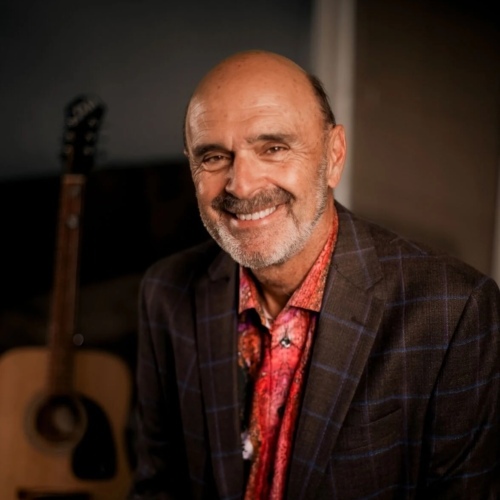
Welcome to a thought-provoking episode of Build a Better Agency! This week, host Drew McLellan is joined by agency owner and author Barry LaBov for an in-depth conversation about the power—and business necessity—of true differentiation. Drawing from over four decades of agency experience and the insights in his latest book, Barry LaBov unpacks why standing out in a crowded, commoditized market is more crucial than ever for agencies and their clients.
Together, Drew McLellan and Barry LaBov challenge the assumption that differentiation has to mean being superior. Instead, you’ll hear how uncovering—rather than inventing—your agency’s or client’s unique attributes can transform your relationships, energize your team, and drive growth. Barry LaBov draws parallels between leading an agency and performing in a rock band, emphasizing a collaborative, open culture where every voice plays a part in generating innovative ideas.
The conversation tackles practical strategies for embedding new business development into agency culture, celebrating innovation even when an idea isn’t purchased, and why making clients look like heroes is the ultimate win. Barry LaBov also shares actionable techniques for discovering hidden points of distinction within your own agency or for clients, turning seemingly mundane details into signature differentiators that fuel pride and retention.
Don’t miss this episode if you’re ready to move beyond the surface of agency branding and dig deeper into what truly sets you apart. By the end, you’ll have a fresh perspective—and a toolkit of inspiring ideas—for making differentiation a tangible, energizing force in your business.
A big thank you to our podcast’s presenting sponsor, White Label IQ. They’re an amazing resource for agencies who want to outsource their design, dev, or PPC work at wholesale prices. Check out their special offer (10 free hours!) for podcast listeners here.
What You Will Learn in This Episode:
- Building a collaborative agency culture modeled after a rock band
- Encouraging all team members to contribute ideas, regardless of department
- Prioritizing ongoing idea generation and proactive client engagement
- Recognizing and celebrating employee efforts, not just business wins
- Understanding the true drivers of differentiation for clients and agencies
- The value of discovering, naming, and promoting unique attributes
- Aligning agency growth with strengthening client relationships and trust
Ways to contact Barry:
- LinkedIn: https://www.linkedin.com/in/barry-labov-6965241/
- Website (Personal): https://barrylabov.com
- Company Website: https://labov.com
Resources:
- Book: The Power of Differentiation (Simon & Schuster), available on Amazon
- Podcast: Difference Talks
- BaBA Summit May 24-26, 2027: https://agencymanagementinstitute.com/babasummit/
- Drew’s Book: Sell With Authority
- AMI Facebook Group: https://www.facebook.com/agencymanagementinstitute
- AMI Preferred Partners: https://agencymanagementinstitute.com/ami-preferred-partners/
- Agency Edge Research Series: https://agencymanagementinstitute.com/agency-tools/agency-edge-research-series/
- Upcoming workshops: https://agencymanagementinstitute.com/advertising-agency-training/workshop-calendar/
- Weekly Newsletter: https://agencymanagementinstitute.com/newsletter-sign-up-form/
- Agency Coaching and Consulting: https://agencymanagementinstitute.com/advertising-agency-consulting/agency-coaching-consulting/
Danyel McLellan [00:00:01]:
Running an agency can be a lonely proposition, but it doesn’t have to be. We can learn how to be better, faster if we learn together. Welcome to Agency Management Institute’s Build a Better Agency podcast presented by White Label IQ. Tune in every week for insights on how small to midsize agencies are surviving and thriving in today’s market. With 25+ years of experience as both an agency owner and agency consultant, please welcome Please welcome your host, Drew McLellan.
Drew McLellan [00:00:34]:
Hey everybody, Drew McLellan here from Agency Management Institute, back with another episode of Build a Better Agency. This is a good one. Uh, it’s gonna appeal to everybody. We are talking about one of the most important topics in agency life, and certainly as we think about our own agency and the work we do for clients. So I’ll tell you a little bit more about our guest in a minute. In the meantime, I am really excited. Danielle and I are headed to MAICON this year. We haven’t been able to make it for the last couple years, but this year we worked our schedule around it so that we would not miss the best AI conference for marketers and business leaders. If you’re not familiar with MAICON, I highly recommend that you use the Google, check it out. It’s M-A-I-C-O-N 2026. It’s in Cleveland, Ohio, October 13th through 15th. Would love to see you there if you are so inclined. Let me know you’re coming. And, uh, we can say hello at the very least. I’m going to be recording podcasts live from the floor, so I’m excited about that opportunity as well. Okay, so I told you about that. Another thing I want to remind you or tell you once again— I know you’ve heard me say it before— but I am super grateful to our friends at White Label IQ. They’re the presenting sponsor of this podcast and make it possible for us to come and hang out every week. And so What White Label does is they come alongside their agency partners. They work with agencies all over the world and help them build the technology that they need to for their clients and themselves. So that could be a website, that could be an app, that could be an AI automation or a set of automations. It could be setting up a CRM. They’ve got an incredible team of people who can help you no matter what your technology problem is. Design, improve, or build something for you or for your clients. So head over to whitelabeliq.com/ami to learn more about them and a special deal they have just for you, our podcast listeners. So good, good folks, and we’re grateful to them. Thank you to them for being our partner for so long. Uh, the last but not least thing I’m going to tell you is I know it seems like May is far away, but in a blink it’s going to be here, which means that the Build a Better Agency Summit is right around the corner. It is going to be in May, just like we always hold it. It’s gonna be here in Denver, just like always. And it’s gonna be awesome, just like always. So conference tickets just get more expensive as you get closer and closer to the actual event. So if you know you’re gonna join us, please grab your ticket now. We’re already about a third of the way to selling out. And so please don’t wait too long so you can join us in May and hear all of the great speakers, but more importantly, hang out with people just like you who are doing what you are doing every day and learn from each other.
Barry LaBov [00:03:22]:
All right.
Drew McLellan [00:03:22]:
Right? I’ll be there, Danielle will be there, and we hope you will too. So head over to the Agency Management Institute website and check out, uh, Build a Better Agency Summit 2027 and grab your ticket there. Okay, so let me tell you a little bit about our guest, uh, today. So Barry Labov owns an agency in Indiana. He has done some incredible work with some incredible, uh, clients over the decades that he’s owned his agency, but he’s just written a brand new book Barry believes that really the power of differentiation is the one thing that we can really help our clients nail. And once they know who they are and how they’re different, it changes the marketing landscape and it changes the conversations for good. So we’re gonna have Barry join us in a minute. We’re gonna talk a little bit about the book, about differentiation, about how his agency shows up differently for their clients. So it’s gonna be a great conversation. I want to jump into it. I know you do too. So let’s just get to it. Let’s welcome Barry to the show. Barry, welcome to the podcast. Thanks for joining us.
Barry LaBov [00:04:22]:
Thank you, Drew. I am a fan. I’ve listened to dozens and dozens of the podcasts you have, and most of the time they’re like listening to a conversation and I love it. So I’m glad to be here and it’s an honor.
Drew McLellan [00:04:35]:
Yeah. Thank you very much. Tell everybody a little bit about your professional background in history before I start peppering you with questions.
Barry LaBov [00:04:44]:
I started out in music. I was a songwriter and musician and was in a rock band. And our music, Drew, sold well under 1 million copies. But I learned a lot. Congratulations. Yeah. But I had songs published by Barry Manilow and Natalie Cole and Billy Joel, people like that. So I had some success, but it really set me up for being in a creative environment.
Drew McLellan [00:05:10]:
Right.
Barry LaBov [00:05:11]:
And I was in a recording studio for years and then Accidentally, I ended up running my company. Okay? I didn’t mean to run a company. I didn’t want to. But then I got into jingles, and then at one point a client asked me to take on their marketing department and do all their marketing. And that’s a, a story in and of itself. The long story is I eventually went along with them and became an agency, and it was something I never dreamt of, Drew.
Danyel McLellan [00:05:40]:
Right.
Drew McLellan [00:05:41]:
Right.
Barry LaBov [00:05:41]:
And within a couple years, I won Entrepreneur of the Year, and all of a sudden we’re working with people and doing a lot of interesting things. So that’s a 45-year synopsis, but we’ve worked with really wonderful companies, some of them small and we love them, and then some of them that are pretty noteworthy, you know, like Harley-Davidson and Macallan Scotch and Audi and Mercedes-Benz, you know, companies like that. So it’s been a really interesting experience for me and our company.
Drew McLellan [00:06:11]:
So I know you, you like to think of, or you liked to think of your agency kind of like a rock band. Sounds like you came by that analogy pretty naturally. Talk a little bit about how you viewed the agency from that lens.
Barry LaBov [00:06:27]:
A lot of my agency friends run their tiny agency or midsize agency like they’re a giant conglomerate. So one department doesn’t talk to the other department and they don’t talk to that other department. And sometimes they war and they don’t talk to each other at all. And on top of it, and I hope I’m not ruffling feathers out there, they normally, or often I’ll say, have maybe 1 or 2 people who talk to the client and the client never talks to anybody from creative or doesn’t talk to anybody from this other department.
Drew McLellan [00:07:00]:
Right.
Barry LaBov [00:07:00]:
As I started the company, I looked at it like a rock band. And in a rock band, you may have 4 or 5 people, and it is not the strongest approach to say only 1 of them gets to sing and only 1 of them gets to play. such and so— solo, let’s say, and only one of them writes. In the greatest rock bands in history, whether it’s the Beatles or Queen, as an example, you had multiple people who could do different things and sing, let’s say. But you also had that wild card, that guy that wrote this great song, and he wasn’t your main writer. And I wanted to create an agency where anybody might just come up with that great breakthrough idea, no matter if they’re in the creative department, account service, operations, whatever. I don’t care. I love the idea that anybody can make a big impact with a great idea.
Drew McLellan [00:07:56]:
And how did you, how did you set up the environment for your agency? Because in, you know, in a lot of agencies, people are sort of heads down doing their craft, whatever their craft is.
Danyel McLellan [00:08:08]:
Right.
Drew McLellan [00:08:08]:
And don’t lift up their head and sort of think bigger picture for a client. So What did you do in your agency to encourage people who were sort of journeymen around their craft to also kind of have that larger perspective?
Barry LaBov [00:08:23]:
Great question. I think it came from necessity, which was this. I started the company in a small city in Indiana called Fort Wayne, Indiana, and we were in the middle of the worst recession of its history. Okay? So it was horrible there. So what could I do to get business going? And it was like, hey guys, hey, hey gals, we gotta huddle around. What cool ideas could we bring to this client?
Drew McLellan [00:08:50]:
Right.
Barry LaBov [00:08:50]:
What could we do here that’s a little different? Because if we just did the same old, same old, I was just gonna wake up every day, high anxiety, freaking out, trying to get anything going. So, I looked at it as it’s our job, starting with me, to find ways to bring new ideas to a client or to a prospect. To somehow get some business going. And that’s how it started. It was, it’s just part of the culture. And in some cases, I’ll be real candid, it’s pushed back on because it’s like, oh, why do we need to waste our time talking about opportunities? And I don’t care about this. And it’s like, well, because if we don’t do it, we will vaporize. We will go away.
Drew McLellan [00:09:31]:
Right, right.
Danyel McLellan [00:09:32]:
Yep.
Drew McLellan [00:09:33]:
So in your experience then, as, as you were running the agency, Talk a little bit about how— I mean, on the one hand, get it, everybody’s playing in the band, everyone can kind of riff on their own, but we also have things we have to get done. How did you find the balance between people kind of heads down doing their job and helping you, in essence, contributing to the running of the agency, the growing of the agency?
Barry LaBov [00:10:02]:
Another Really great, insightful question. I started as a bootstrapper, so it was one person, then another, then another. Again, not to beat this rock band analogy, but when you’re in a band, it’s not one of you really performing and the 3 just looking around. It’s the 4 of you.
Drew McLellan [00:10:20]:
Right.
Barry LaBov [00:10:21]:
And so, I made sure that we shared the success, we shared profitability. to a fault, Drew, and I, and I went too far on this. And because I was disappointed in the long run with the results, I say that. But I really wanted anybody that joined up with me to possibly be my owner in this thing because I didn’t want to start the band. I didn’t want to start the, the company.
Drew McLellan [00:10:46]:
Right.
Barry LaBov [00:10:47]:
But I wanted to see us succeed. So I have been very, very open about giving credit to somebody, very open about letting them have the spotlight on what they’re doing. And I find, and this is a little secret I have, I find that if I want one of my people to really do a good job coming up with either ideas or some great research for a client, I let them know that, hey, when we get this all done, you get to present it to the client. And they went, ooh, okay.
Drew McLellan [00:11:16]:
Right.
Barry LaBov [00:11:16]:
And there’s part scared and they’re also part excited. So I shared it. I still share it today. I don’t want the credit. I don’t wanna be in the spotlight. I want to see us win. And that’s what I’ve done throughout. So, from a distance, I’ve had people say, you know, I’m watching you and the people work together. I don’t know who the leadership team is, and I don’t know who the low-level team is there because you guys are all kind of like the same. And I go, well, that’s probably good.
Drew McLellan [00:11:45]:
Right. So, you said you went too far. Tell us more about that.
Barry LaBov [00:11:49]:
Well, I really tried to inspire people. with things I thought were important. Like if we really did great, here’s profitability that we can share. Now that sounds great, but it also means that if we don’t make that profitability, we’re not sharing it.
Drew McLellan [00:12:06]:
Right.
Barry LaBov [00:12:06]:
So sometimes that comes over as a negative to some people where we go, hey, we had a bonus, we’ve done this and that, but we don’t get that bonus this year. We don’t get whatever. And sometimes that’s not viewed very well. Also, I offered up to a number of people a portion of ownership. This was 20-some years ago. And I thought it would inspire them to think like me. And it did not inspire them to think like me, even though they took money out of their pocket and invested. I would say in 80% of the cases, it was still up to Barry to figure this out. They didn’t want to get into trouble with someone else who was also a so-called small owner, but an owner. And I just realized that it, it didn’t work. I, I was working harder for them.
Drew McLellan [00:12:57]:
Yeah.
Barry LaBov [00:12:58]:
And they just didn’t get it. And, and it’s on me because I thought it’s some, it’s something that would really inspire them. And it’s not, it’s not for everybody. And honestly, Drew, I thought, golly, anybody would want to have an ownership stake and make a lot of money. Yeah. And that’s not true.
Drew McLellan [00:13:14]:
No. You know, it’s interesting, maybe 5 or 10% of our employees have Both the desire and the drive to actually be an owner. Because we are entrepreneurs, we assume that everyone’s kind of wired the way we are.
Barry LaBov [00:13:31]:
Right.
Drew McLellan [00:13:31]:
And what we’ve found over the years is that that’s just not true. And even if somebody owns a little piece of it, that doesn’t really change their behavior or their attitude about it, right? So, did you sell them shares or did you give them shares?
Barry LaBov [00:13:47]:
I sold them shares.
Drew McLellan [00:13:49]:
Okay. So, and again, what, 5%, something like that, right?
Barry LaBov [00:13:53]:
Yeah. Anywhere from 1% to 2%. And when they all cashed out at one point, they all made 50% or more return on top of it.
Danyel McLellan [00:14:01]:
Right.
Barry LaBov [00:14:02]:
So, I mean, everybody made money. And so, I mean, I’m going, oh my gosh. Now, quick, quick story, but this, this could relate to some of our viewers. And that is one of my very favorite employees who’s been with me for over a quarter of a century. I came to her early on. I said, it’d be great to have you have some ownership. And she said, no. And I was deeply hurt.
Drew McLellan [00:14:23]:
Yeah.
Barry LaBov [00:14:23]:
And so I went back and I talked to her. I thought, what’s wrong with me? Why am I, you know, so undesirable as a co-owner? And she said, it’s not that. She said, I grew up in a household. My dad ran a business. He talked to my brother all the time about the business at the dinner table. My mom would get into arguments with my dad about, I don’t wanna have anything to do with running a business.
Drew McLellan [00:14:44]:
Right.
Barry LaBov [00:14:44]:
I said, okay. And she said, but I love working for you. Can I keep doing that? I said, yeah. So, you just got to realize that some of our folks are not wired that way.
Drew McLellan [00:14:54]:
They really aren’t. And we find that until you get to about 10%, so there’s a subset of your employees that whether they own a share or not are going to act like owners. And it’s a very small subset.
Barry LaBov [00:15:09]:
Oh, yeah.
Drew McLellan [00:15:09]:
Right? And then within that subset of those people that already Anybody that you think you want to share ownership with, they’re already acting like an owner even before they have a share.
Barry LaBov [00:15:21]:
Right.
Drew McLellan [00:15:22]:
Then that subset, it takes about 10%. It’s big enough to be significant for them to get some of the advantages of ownership, whether it’s dividends or whatever it is, to sort of lock them in. Anything smaller than that, even if they’re entrepreneurial, if they get offered 5 grand more a year, They’re still out the door. And so, a lot of owners make the exact same assumptions that you did, which was everybody wants to be an owner and a tiny little piece of the pie is going to be enough to get them to act the way I want to. And the truth of the matter is, if they’re not already acting that way, ownership’s not going to change it.
Barry LaBov [00:15:58]:
I think that’s brilliant. I wish I knew it back then. Yeah.
Drew McLellan [00:16:02]:
It’s a tough lesson to learn.
Barry LaBov [00:16:03]:
Yeah. It is.
Drew McLellan [00:16:04]:
Yeah. Yeah. So let’s talk a little bit about new business and selling. So talk about sort of your philosophy of how did you sell, thinking both about existing clients and brand new prospects, people who weren’t already in the door?
Barry LaBov [00:16:22]:
Well, I have a very strong culture at the company of new business and growth. And what I call growth is we’re growing existing clients’ business. So I don’t like the term, some people call it new, new. And I go, please. There’s new business, which is a new client.
Danyel McLellan [00:16:40]:
Right.
Barry LaBov [00:16:41]:
And there’s growth. And we obviously realize that most of our profit and most of our long-term success will come from existing clients. So, we, 2 times a week for 15 to 20 minutes, have an all-company meeting that’s virtual. And we cover every idea and opportunity we’re presenting to our current clients as well as prospective new clients. We cover them all. We have a pipeline. We have a couple dozen potential opportunities out there that we’re not just talking to the client or new client to, but we’re actually coming up with some creative considerations. And we will do creative jam sessions or whatever, and we watch them and we stay on top of them. We have weekly meetings with all of my top account people and creative people. to go over every single one of them. We utilize our existing capacity if somebody is available to jump in and do some research for us. It is a big focus. And it’s— I’ll tell you this, Drew, I’ve come up with, with our team, this, this approach to doing it. It’s a model. And when I describe it to other agencies or when a new employee comes in, Either way, I get the same result from them. They go, my God, I’ve never seen anything like this. We’re very focused on that. And I’ll tell you, it’s probably like I talked to you earlier, it’s starting in a small city with absolutely no momentum and realizing I’ve got to do something and it’s not smile.
Danyel McLellan [00:18:20]:
Right.
Barry LaBov [00:18:20]:
I’ve gotta come up with something that’s valuable for another company to say, okay, here’s some money.
Drew McLellan [00:18:26]:
Yeah, right. So, talk a little bit about that methodology that you share with others that gets that reaction.
Barry LaBov [00:18:32]:
Well, we’re focused on opportunities. So, like I said, we have a twice-a-week opportunities meeting. We have a funnel that talks about the opportunities that are in play as well as the estimates. We track what we’re doing on each of those. Every single client we have, is focused on so that we can bring something more to them. And sometimes we don’t know what to bring to them. We’re going, I don’t know. Okay, well then we do some research, or then we’ll do what we call a jam session where we’re doing creativity. But we will call our client up and say, hey Drew, this is Barry from LeBoeuf. I, I got a couple of ideas. I’d love to bounce them off you. I think you’ll find them of interest. I don’t know, do you have 30 minutes? And normally if it’s a client, they go, Yeah.
Drew McLellan [00:19:21]:
Right?
Barry LaBov [00:19:21]:
And we get on and we talk about it and, you know, 8 out of 10 times they go, boy, that’s really great. Thanks a lot. Either we don’t have money, we don’t have time, this isn’t the right time, or you kind of missed the boat on a couple of these, which is a great learning experience. But every once in a while they go, you know, I’d like to learn a little bit more about that second idea. Can we talk about that? And Drew, that’s how we’ve grown our business.
Drew McLellan [00:19:48]:
Yeah. You know, I think so often agencies wait for a moment, right? Like, oh, it’s our quarterly business review, or—
Barry LaBov [00:19:57]:
Yes.
Drew McLellan [00:19:57]:
We’re 2 months out before the contract renewal. We wait for these magic moments to present clients ideas. And you know, what we teach at AMI is more what you’re doing, which is you gotta be putting new ideas in front of clients every single time you talk to them.
Danyel McLellan [00:20:12]:
Right.
Drew McLellan [00:20:13]:
And you have to let go of the idea that it, the conversation is a failure If they don’t buy the conversation, having the conversation is the success. Demonstrating that you’re thinking about them, demonstrating that you have new ideas—that’s the success. And if they buy something, that’s gravy. It’s not that we’ve wasted our time if they don’t. So how do you? How did you help your team come to recognize? Because I think a lot of employees are reticent to constantly be putting new ideas in front of clients because. They don’t, because they, A, they don’t want to sell, and B, they’re afraid that the client’s gonna say no. And we have to remove that barrier that that’s really not the litmus test. So how did you do that?
Barry LaBov [00:20:55]:
Well, in rock music, you do a thing called a jam session. And what that means to everybody is 3 or 4 or 5 people get in a room and they’re making noise. And 90% of the time, those jam sessions end up with nothing but a bunch of noise. But once in a while, there’s a great, great song in there. Okay? Also, every once in a while, if it’s a great song, a lot of these great songs start off as an accident. The person took the guitar and played something on the fret that wasn’t normal. His fingers went to the wrong spot, but it sounds beautiful. So, we really instill in our people that number one, it’s not about being perfect.
Drew McLellan [00:21:35]:
Right.
Barry LaBov [00:21:36]:
Don’t even go— we call it the perfect Trap. It’s a it’s a chapter in my book. It’s all about worrying about we got to make it perfect. No, no, no. Don’t worry about perfect. Look at progress. Look at ideas. The other thing we really really share with our people is even if we’re told no no I don’t think that’s going to work, wouldn’t the client appreciate that? I mean I would. And and the thing I tell friends of mine who are ad agency owners who don’t do any of this, they’re they’re opposed to selling and they think it’s horrible and I. I don’t want to be a salesperson. And one of them just shut their doors a couple weeks ago.
Drew McLellan [00:22:14]:
Yeah.
Barry LaBov [00:22:15]:
I try to say to them, I go, look, how often does somebody reach out to you and say, hey, I’ve got an idea for you guys at your agency? And I normally hear, I never hear that. I go, great. What if somebody did? And that wasn’t a sales pitch. Let’s say it was your accountant and your accountant calls you and said, hey, I think I have an idea for you guys. It could be really good as far as what you’re doing for taxes. And they go, okay, wow, let’s talk. We appreciate that. So it goes in a different direction at our company where it’s, this is literally a gift. It is an opportunity for us to share something we think is valuable. And we do believe in pattern matching, which is we came up with an idea for this particular industrial company and they go, no, we don’t like it. And then we’re going, wait a minute, could that work with this other company? And we go, well, yeah. So then we’ve called that company and we go, hey.
Drew McLellan [00:23:07]:
Right. Right.
Barry LaBov [00:23:09]:
of this, but let’s try it. So that’s what we do. It’s a constant state of innovation and improvisation.
Drew McLellan [00:23:17]:
And for your employees, how did you get them over the idea that the success or the end game was presenting the idea, not getting the client to buy anything?
Barry LaBov [00:23:30]:
It’s how we celebrate it internally, because we don’t say, hey, so-and-so presented this and failed. We go, hey. So-and-so, how’d that go? Well, they liked that. Hey, it is awesome. Isn’t it great? And folks, so-and-so, so-and-so, and so-and-so all were involved in it. They get a big round of applause, all that kind of stuff. It’s really celebrating the behavior that you want to see. So, I don’t wait for one success. And I am a big believer that you have to celebrate virtually anything that’s positive with your employees, because if you don’t, and we call this avoid the void, if you don’t do that, there’s a void in communication. So if somebody goes and presents and you don’t say a word because they lost, they’re gonna, well, you know, he probably thinks I did a bad job. He probably doesn’t like me.
Drew McLellan [00:24:17]:
Right.
Barry LaBov [00:24:17]:
And instead, I say we have to avoid that void of communication ’cause people fill negativity or negative thoughts into there. So we celebrate it. And I’m telling you, we celebrate it. And today’s employees, most of them, as you were describing, hey, if we win a project and it’s $30,000, They’re about as happy as if it was $850,000. Right. There, there’s really no difference. It’s like, oh, right. Okay. And we, we do that. So we have to constantly present that message.
Drew McLellan [00:24:50]:
Okay. I wanna talk a little bit about your more views on new business, but let’s take a quick break first. Then when we come back, we’re gonna talk about the idea of helping your team understand the business of new business and our clients, which is It’s not about the outcome. It’s not about the pretty pictures. It really is about how we impact our business. But let’s take a break and we’ll come back and talk about that. Hey everybody, just want to remind you before we get back to the show that we have a very engaged Facebook group. It’s a private group just for podcast listeners and agency owners that are in the AMI community. And to find it, if you’re not a member, head over to facebook.com/groups/ami. /BABApodcast. So again, facebook.com/groups/BABpodcast. All you have to do is answer a few questions to make sure that you are an actual agency owner or leader, and we will let you right in. And you can join over 1,700 other agency owners and leaders. And I’m telling you, there’s probably 10 or 15 conversations that are started every day that are going to be of value to you. So come join us. All right, we are back and, uh, we’re talking to Barry about his agency and sort of the attitude that they take with new business, both for existing clients, growing those existing clients and new clients. So one of the things that you talk about in your book and one of the things that you’ve talked about on other shows is this idea of that business is our client’s business is What they’re trying to sell, what they’re trying to accomplish. And it’s not really about, if you will, the art, the stuff that we make. Talk a little bit about how, how you approach working with your clients from that perspective.
Barry LaBov [00:26:38]:
One, one thing I did a few years ago that was very impactful for our employees is, you know, cuz they’ll look at the end result. Gee, we’re working with Harley-Davidson on blank. And I said, yes. I said, let’s look at that client that we’re working with. And they go, okay. And I went to this big whiteboard and I said, we’re working with Mike over at Harley-Davidson, and he’s a great guy. But Mike used to work at Bombardier Recreational Products, and he helped us there. And when he went to Harley, he brought us there. And then, and I went through this circuitous diagram—
Drew McLellan [00:27:19]:
Right.
Barry LaBov [00:27:19]:
Of all the relationships And all the people that started because of Mike, but because our people got along with him, we created things he liked. He thought we were these partners he could turn to. And all of a sudden, you’re looking at the fact that there were, you know, 8 or 9 different clients we were currently working with, all based on relationships that started with him. So one of the things we really try to express is that Each one of these conversations our people are having, each one of these, uh, times they’re doing a little bit of research or some sort of creative ideas for the client could be something that really means a lot to that client. And it also will then help all of us have obviously better job security and growth. And I’ll tell you, many of my good friends in agency worlds don’t like to do that kind of stuff. They’re friendly with one client. They don’t ask for a referral. They, they wanna, they really feel that asking for more business or suggesting things is, is being pushy. And I really try to express it’s the opposite. One more thing I do, Drew, is I will get the testimonials on video of, uh, from our clients.
Danyel McLellan [00:28:34]:
Yeah.
Barry LaBov [00:28:34]:
And I make sure they share. I say it this way, I go, will you please share what it’s like to work with us? Because I want our employees to see this.
Danyel McLellan [00:28:43]:
Right.
Barry LaBov [00:28:43]:
So I don’t say, so I can go get more money from somebody, and they talk about the difference my people make. So I’m trying to make it personal. I hope that answers your question. That’s what I’m really focusing on. Make this personal so they want to do it.
Drew McLellan [00:28:57]:
Yeah. At the end of the day, new business, whether it’s with an existing client or a new client, is a relation— is, is the relationship and the trust that we have with another human being. And to your point, when we do that well, and they move on, which many of them do, the agency is blessed by being taken along for that ride and going to client 2 or client 3. We were just with an agency earlier this week and somebody said, you know, this is the 4th business that this client has been with that we’ve gotten to work with because they take us with. And all of that is around building that confidence and trust. Which gets back to what we were talking about before the break, which is one of the things I need from my agency is I need fresh ideas. I’m in meetings all day. I’m, I’m in, I’m on the corporate side. I’m in the, I’m in the, I’m in the pressure cooker. You, you, my agency, have the luxury of thinking bigger picture, of not being bound by some of the, uh, you know, restraints that I’m bound by. So I’m counting on you to not only bring me new ideas, but to be always thinking on my behalf and always be bringing me new ideas. And you’re right, I may not be able to buy them today, But the fact that you’re thinking about me makes me confident that I’m not going to miss an opportunity, which is a huge deal.
Barry LaBov [00:30:13]:
Well, I really do believe, and we share this with our employees, you know, some agencies are pretty arrogant. It’s like going to a country club. There’s a little uppity. Okay. We, we can’t be that way at our company because what we say to our employees is that we are the people behind the heroes at a company. We want our client to look like a hero.
Danyel McLellan [00:30:36]:
Right.
Barry LaBov [00:30:37]:
It’s our job to give that client ideas. It’s our job to feed them new thinking. It’s also our job to respectfully— and we’re from the Midwest, so we do this really well— respectfully challenge some of their thinking. Sure, of course. Not be jerks, not be condescending, but challenge it and do it in a way that’s, let’s say, one-on-one. So if the client’s a little rustled and ruffled and kind of, ugh, we’re saying, look, I’m just telling you, this is something we’re seeing. We want that client to look like a hero. So then when we get done, she goes in and she’s talking to her boss, right? And she just might mention something Lebov had said to her without giving us credit, cuz I don’t want the credit. Right. But if she looks like a hero, we are the people who are behind that hero.
Drew McLellan [00:31:24]:
Yeah. Well, and it’s interesting because I think for a lot of agencies, they, they struggle with that a little bit in that our clients probably aren’t gonna say to their boss, when the boss is like, oh, that’s a great idea, client’s probably not gonna go, well, it wasn’t mine, it was the agency’s. They’re gonna just gonna go, oh good, I’m glad you liked it, we’re gonna do it, or whatever it is.
Danyel McLellan [00:31:50]:
Right.
Drew McLellan [00:31:51]:
That our job is to get them accolades. You know, I always, we always say to our clients, okay, hey, agency owner, or hey, account person, you need to know what it’s gonna take to get your client a raise, a bonus, or a promotion. That’s, that’s success for us. And by the way, if you’re part of the team that helped them do that, then what that means is you are going to have a deeper relationship with that person because now you’re contributing to their success.
Danyel McLellan [00:32:21]:
Yeah.
Drew McLellan [00:32:22]:
And so of course they’re gonna wanna keep you around and want you to keep giving them new ideas and all of that. So it is, it is how you build the longevity that every agency is hungry for, right?
Barry LaBov [00:32:31]:
Well, it is. Uh, we also have another interesting nuance to that, Drew, and that is sometimes, you know, we’re working for a client who might be a little difficult to deal with, or there’s some situation where he or she’s not looking very good, and we’ll be able to be one-on-one with some people and speak on behalf of that client without her or him there, but provide a valuable, valuable, honest insight that can help.
Danyel McLellan [00:33:02]:
Yeah.
Barry LaBov [00:33:02]:
And, you know, sometimes we’re doing research and we’re saying— they’ll go, yeah, I don’t like that that person at this company’s doing whatever. And we go, okay, I hear it. But it’s a rare person who is able to step up like he’s doing right now and offer blah, blah, blah, whatever it is. And they go, well, okay. And we’ll go, look, If it wasn’t true, I wouldn’t say anything. Right. And so I can help that client not only look like a hero, but in some cases I can take some of the, you know, some of the mud that was being slung at him and, and protect him from it because we see it a little clearly compared to him. We just, we understand it better and we can speak as that third person.
Drew McLellan [00:33:40]:
Well, you know, uh, we have that outside perspective, right? So it is very difficult to read the label of a bottle that you’re inside. Right? Right. And so when you have— I think agencies are in rarefied air, which is we are close to the inside, but we are still enough on the outside that we do have that perspective. And I believe it’s our obligation to bring that perspective to our work because our clients can really be blinded to it because of what they’re hearing internally or what they’re seeing internally. And they don’t really have a lens to look at their business In the same way that we can. I agree.
Barry LaBov [00:34:21]:
That’s really well said.
Drew McLellan [00:34:23]:
So talk a little bit about differentiation. I know that for you and your agency, that’s one of the things that, and you know, I think everybody talks about it, but I think protecting it, building it, amplifying it is something a little different. So talk in today’s world where there’s, first of all, every one of our clients has Many competitors. And, and, and we have to recognize that some of those competitors are as good as our clients are at what they do. So it really is about how to help the buyer, whoever that end buyer is, sort of see the differences between their choices. So talk a little bit about your agency’s perspective on that.
Barry LaBov [00:35:03]:
We have a total focus on differentiation. So a few things. We have a process that when we work with our clients, There is one step that I, I don’t know one agency or company in the world that does. I mean, we literally go into their facility, whether it’s a plant or whether it’s a technology facility, and we look for differentiation. We, we’re, I send my technology and technical team in to find these things. Okay. And I won’t go into a lot of the details with it, but we will find a number of opportunities that are right in front of the client that they pay any attention to. So it’s a, it’s a great thing cuz we discover it. We’re not creators of the differentiation. So we do that for our clients. Additionally, you ask a few other questions. A few interesting nuances to what we do is, first of all, many of our clients, and it, that can include, uh, agencies that are out there as well, are being, uh, pressured to commoditize.
Drew McLellan [00:36:09]:
Hmm.
Barry LaBov [00:36:10]:
To look like, to act like, smell like, and price like everybody else, right? And it’s a slippery slope, as the saying says, because not only are you gonna make less money and probably not do as good a job, and you lose all the little interesting things, but you demotivate your employees. And now all of a sudden, why do they wanna stay? And why do they wanna do a good job? I mean, after all, we’re like everybody else.
Danyel McLellan [00:36:35]:
Yeah.
Barry LaBov [00:36:36]:
So, we look for differentiation. And the other thing I’ll share is people, confuse differentiation with superiority. The greatest example is Harley-Davidson. They have a differentiated sound, that Harley thunder when you hear them coming down the road.
Drew McLellan [00:36:54]:
Right, right.
Barry LaBov [00:36:54]:
They have the Harley owner group, which is an amazing, amazing owner group that nobody else has. Okay, guess what? They have a lot of the same parts that other motorcycle companies have. They do not They don’t leak oil less than someone else. They’re not faster. They’re not cheaper. They’re not superior in every way. And those geniuses there in Milwaukee know that. But they also know, wait a minute, this unique attribute of ours should never be changed. So what I really work with people with, Drew, is looking at and discovering what they’re doing that’s unique, even if it’s not superior. It’s, it’s a style sometimes. It’s a personality.
Drew McLellan [00:37:40]:
Right.
Barry LaBov [00:37:41]:
It’s a quirkiness. And, you know, I, uh, when I have a client that starts to talk to us, I kind of give them a warning in a good way. But it’s part of our differentiation because we jam, J-A-M, we jam like a rock band. And I said, here’s the thing, if you want one single point of contact, we’re probably not the right company. And I said, I am not against companies that do that. I said, but if you work with us, You might be in 5 meetings in a month and there could literally be a dozen people at one point or another that are in there bouncing ideas off you. And if you find that undesirable because you want to streamline it and have one person, we’re just not the right company. Now, that doesn’t mean I’m saying we’re superior and the other company’s wrong. I’m saying that’s a quirky, unique, distinctive attribute of Lebov.
Drew McLellan [00:38:33]:
Right.
Barry LaBov [00:38:33]:
And we’ve got to determine what those are. And then we have to hold on to them. Because just like if you have a mole and it’s your distinguishing characteristic, like the great model Cindy Crawford had, her mother was smart enough to say, do not surgically remove that mole because it may leave a scar.
Drew McLellan [00:38:55]:
Right.
Barry LaBov [00:38:55]:
And that’s what happens, Drew, when we take away that one or two things, those two or three things that we do that are great. And unique, and we become like everyone else. It leaves a scar. People don’t care about us. They don’t wanna buy from us. Employees go, there’s no reason to work there anymore. They used to be great. Yeah.
Drew McLellan [00:39:14]:
You said something as you were describing that. You said, we go into a company and we go in to discover their distinctness or their differences, and they don’t see it. Why do you think they don’t see it?
Barry LaBov [00:39:28]:
Same reason you don’t. Same reason I don’t. The agency owners—we’re so close to it every day. We take it for granted. We step over it on the way into the office. We don’t even pay attention to it. That’s why we have to learn what it is. One of the questions we’ll ask our clients, employees, and leaders, as well as customers, will say, “Hey, what should?” whoever, never, ever, ever change. And, you know, so if you ask a Harley owner, one thing they’re going to go, don’t change the sound of that engine. I love the thunder. Right.
Drew McLellan [00:40:03]:
Okay.
Barry LaBov [00:40:03]:
And you’re going, oh, wow, we were just going to get rid of it. We could have saved money. Okay. No. And what I’m saying is we want to know what should never be changed. Because you know what, entrepreneurs, I’m like this. I know you. I know you are exactly this way, Drew. If somebody said, hey, Drew, you could change this and this and that and everything would be great, you’re going, let’s go. We have to watch it. We have to make sure it’s more important to hold onto the 1 or 2 or 3, not 100, but the small 2 or 3 unique attributes we have and then name them and promote them. You know, like certified pre-owned automobiles. They used to be called used cars.
Drew McLellan [00:40:43]:
Right, right.
Barry LaBov [00:40:44]:
Now they’re certified pre-owned. Now they’re worth more. Now they have this, and you go through the litany of how they’re being tested and all this, and we’ll pay more money. Okay. Okay, it was given a name. It stopped being used car that’s in nice shape and it became certified pre-owned. So like for us, somebody, um, some of my, uh, friendly competitors say they do branding and I go, we do brand re-engineering. And they go, well, what’s the difference? I go, here’s the 5 steps. And we’re discovering, we’re not gonna go create your brand, we’re gonna discover it. And many of the other agencies out there will start, or maybe their second step is create a logo. And that’s like way down the road for us. We need to understand what makes you unique, what is technically different for you, what is the customer experience that your customers experience. We need to understand all that. And then we come back and say, okay, here’s what you really are different at. Here’s what you never ever should change. And then, by the way, you can do a website, you can do ad campaigns and—
Drew McLellan [00:41:53]:
Sure. Right, right.
Barry LaBov [00:41:53]:
You know, and immediately— Telling people about those things, right? Yeah. Yeah. Right.
Drew McLellan [00:41:56]:
In today’s world where clients are being, are under incredible pressure to perform, you know, a CMO gets about 6 months to hit the, hit the marks or otherwise they’re hitting the street. Right?
Barry LaBov [00:42:11]:
Right.
Drew McLellan [00:42:11]:
How, how is your, how does your philosophy, how does your viewpoint ultimately get to the point where the client is achieving their goals so they get, like we were saying, the raise, the bonus, or the promotion?
Barry LaBov [00:42:27]:
Well, we have to understand their business, and a lot of companies don’t. So when we get a new employee that comes in, they go, I never cared about learning about, you know, rail cars or something, right? And we go, no, we got to learn about them. We learn about their clients, the clients’ products, their business, and we are viewed by most of them as an extension of their department, whether it’s their marketing or launch department. We’re an extension. They call us up, they go, hey, what about this? We go, okay, we’ll look into it. We come back, okay, that’s a good idea. Let’s push it a little further. That’s how we help these clients. Most of these clients, and this is a really good thing too, most of the clients that we have today are a bit bit different. They’re wired a little differently than 20-plus years ago. They actually do want the employee base to be motivated.
Drew McLellan [00:43:24]:
Mm-hmm.
Barry LaBov [00:43:25]:
They really do. 20 years ago, they said, I don’t care, I’m paying them $5 an hour. They just need to work. Now they’re going, no, no, I need the employees engaged. And we really will help them in that area because we’re saying, look, these differentiations should be points of pride for your employees. You need to do an all-employee celebration. Well, Well, of course that client’s gonna look like a hero.
Drew McLellan [00:43:45]:
Right.
Barry LaBov [00:43:45]:
I mean, he or she’s walking up there and the place is giving ’em a standing ovation. So that’s what we do. We’re an extension, but we have to understand their business. And a long time ago, we won a client and he was working with a couple of other agencies. And I said to him, I said, why did you choose us? ‘Cause I had no idea. And he said, well, you understand our business. The other guys are just art shops and logo shops and they get into fights with us over colors Fonts, you know, PMS colors. I, I don’t want to get into those fights. I want somebody that understands business. So that’s how they look at us.
Drew McLellan [00:44:24]:
Yeah. At the end of the day, I think every client, it’s not that they don’t want pretty or visually appealing work. Sure. But they need to solve their business problem. So, so I’m curious. How do you hire? What do you look for in an employee, for someone who’s gonna be able to come in and actually dig in and understand a client or a prospect’s business?
Barry LaBov [00:44:51]:
We look first and foremost at their character because we feel if they have really great character and you can pick up on it, you can listen to how hard they worked in college, or, you know, if they had 3 jobs when they were in high school, things like that. You listen to those things and you go, God, this person actually has some character. This person cares. And then what I also want to know from them is I want to know where they want to be in 3 or 4 or 5 years. What’s success for them? Because sometimes their version of success is completely beautiful with ours, and sometimes it’s not, even if they’re brilliant.
Drew McLellan [00:45:30]:
Right.
Barry LaBov [00:45:30]:
So we look for the character, the hunger, The humility and determination. We’re looking for those attributes. And of course, we look at if they’re a designer, well, what’s their work look like?
Drew McLellan [00:45:45]:
Sure, of course.
Barry LaBov [00:45:46]:
Because we do great work. Our designers are fantastic, but it’s, you know, somebody can show you their design work and it may not even be their design work for all you know. So we have to look at all those things. We need somebody that really looks at what we’re doing as potentially the chance of a lifetime.
Drew McLellan [00:46:05]:
So what prompted the book?
Barry LaBov [00:46:07]:
Getting to be a very ancient old man. And I thought, you know, there’s a lot that we have learned in differentiation that I want to codify. I want to put it together. And I started writing it. And then something happened called COVID-19.
Drew McLellan [00:46:21]:
Yeah.
Barry LaBov [00:46:22]:
And the book went from, hey, here’s a pretty basic book on how to differentiate your product and position it better and do a lot better as far as pricing and profit. And it went to, now wait a minute, 100 million people quit their jobs during one year during COVID They needed to feel that their company that they were working at was differentiated. And evidently they didn’t feel that way and they left. And I thought, you know what? It’s all about winning hearts, minds, and then market share. So that’s what inspired it. And it’s a part how-to book. It is not my memoir. I’m barely in it. There are 50 or so great profiles of successful people. There are some entertaining profiles of non-successful examples. But of course, I never named who the people are. It was just kind of fun to look at where people started and where they ended up. But it’s a, it’s a how-to book, and I believe it’s inspiring.
Drew McLellan [00:47:24]:
What will readers be able to do after they read the book that they weren’t able to do before they picked up the book? What’s your goal?
Barry LaBov [00:47:33]:
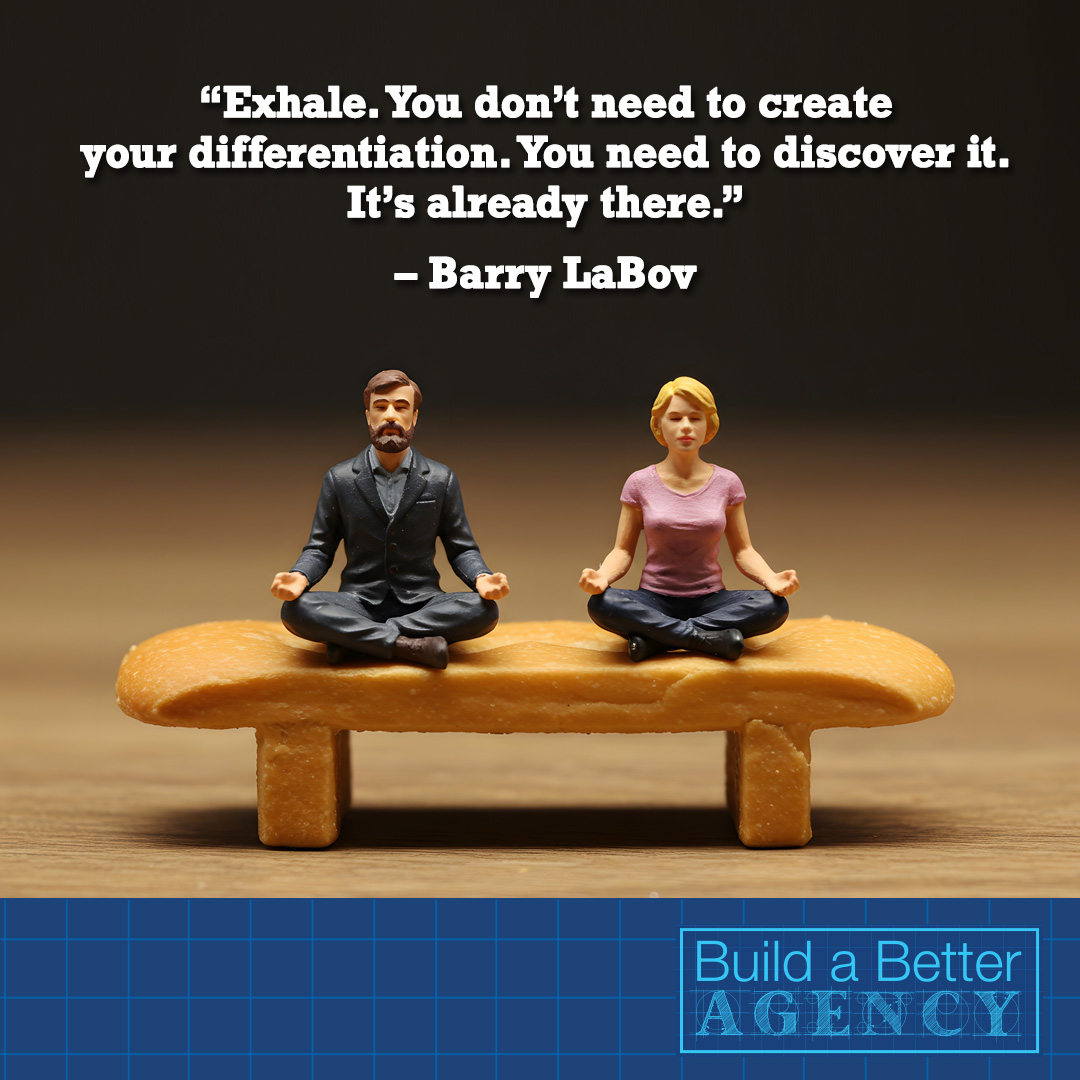
My goal is I want to inspire 1 million people with the message. And the message should be, first of all, they should exhale and go, wait a minute, I don’t need to create my differentiation. I need to discover it. It’s already there. I’ve already done it. I need to use my creativity refining the message about what we do and why. And to me, if they can do that, and I give you a how-to on how to do it, and of course, if they want to call me up, great, my company will jump in with them. But it’s, it’s a book that should make somebody go, look, come on. We’ve got unique things. We’re doing a couple things nobody does quite this way.
Drew McLellan [00:48:17]:
Right.
Barry LaBov [00:48:18]:
Let’s stop being ashamed of it. Let’s name it. Let’s celebrate this. So, I want end result, I want a million people, and we’re on our way to that, and to feel motivated. And I want them to inspire the people at their companies. So, when I say a million, I’ve got a client that has 17,000 employees and they’re helping to inspire their employees. Okay, I got 17,000 people there. That’s how we’re doing it.
Drew McLellan [00:48:45]:
Yeah. From your perspective, because one of the things we’ve been talking about throughout the, our conversation is it’s nice to have that outside perspective. So if I’m trying to figure out what makes me different, and, and from the book, I, my impression is it’s both what makes me Drew different, but also what makes me as part of the leadership of AMI, what does make what AMI is different, right? It’s both a personal difference. And, and the company difference. Sure. Can I, can I find that myself? Can I figure it out all by myself?
Barry LaBov [00:49:22]:
Uh, not by yourself, but you can figure it out on your own with the help of a lot of people who know you, who have, could have been bought from you, who have lived with you, who have endured you. And you start to look at, wait a minute, there’s a, there’s a secret sauce that I have that, right? I almost think is not that desirable, but people tell me it’s great. Right. And you, that’s what you can do. And could you find it? Absolutely you could.
Drew McLellan [00:49:51]:
And, and the book will show me how. Yes.
Barry LaBov [00:49:54]:
Yes, it will.
Drew McLellan [00:49:55]:
Yeah. Yeah. So tell us a story of someone who followed the methodology of the book and what they discovered about either themselves or their company.
Barry LaBov [00:50:08]:
Real quick story. It started out as something where you’re going, oh my God. I work with a wonderful company that is an industrial company. They do components. So it doesn’t sound exciting, but I find it exciting and they do too. They’re an engineering-based family business and they created a manhole cover or man lid, as they call it, for a stainless steel trailer.
Danyel McLellan [00:50:33]:
Mm-hmm.
Barry LaBov [00:50:34]:
Those beautiful stainless steel trailers going down the highway. Okay, well, those trailers inside them have flammable fluids and/or liquids. They’re very dangerous. If you open up that man lid, it could— there could be an explosion.
Drew McLellan [00:50:47]:
Okay.
Barry LaBov [00:50:48]:
So I’m sitting there and I’m talking to the VP of engineering, who’s a family member, and he goes, yeah, we just spent like $800,000 on this brand new man lid, and it’s got a latch that is pressure activated, and it will not allow you to open that Shut up. You cannot open up that man lid if there’s too much pressure inside. I said, oh my gosh, that’s brilliant. I said, how much more money do you charge for this? He goes, we don’t. We charge less because we’re in competition with the Chinese. I said, all right, how do you promote it? He said, I just figured that if people don’t want their head blown off, they’ll learn about it. And I said, well, okay. I said, okay, now, um, tell me this. How do you promote it? And he goes, we don’t promote it. I said, okay. I said, all right, so you don’t promote it, you don’t charge more for it? And he goes, no. I said, okay, you at least had to have named this brilliant, brilliant innovation. What did you call it? And he said, we just call it Latch.
Drew McLellan [00:51:48]:
Right.
Barry LaBov [00:51:50]:
And I said, Latch? And he said, yeah. I said, okay, did you celebrate Latch with your employees? He goes, no, it’s our job to do good stuff. I said, think of all you’ve lost. And so they’ve gone on to create their own safety latch and everything. I said, think of all you’ve lost so far, but you’ve already created this thing. And I said, you could make more money, you could position yourself uniquely and inspire all of your employees, and you don’t need a new product. You got it. So that’s an example.
Drew McLellan [00:52:19]:
So what’d they do with all that? How did they go from kind of taking it for granted Right. To actually making a big deal about it with their prospects, their employees, their current customers.
Barry LaBov [00:52:32]:
They promoted it. They, uh, sold it at a premium price. They celebrated it with their employees, and it spurred on more brand new innovations, which for them, Drew, is their world. Their world is let’s do more cool engineering things. Well, it spurred them on. Now imagine everybody in the audience, no different from an ad agency, okay? Or a marketing agency. By celebrating this thing that they had, it spurred them on to do even more cool stuff cuz that’s what they love. Right. So it was a big success.
Drew McLellan [00:53:07]:
Yeah. It’s a good reminder that, you know, I think for a lot of agencies, they wanna work with cool, sexy brands, the Harleys of the world. Right. Right. And it’s easy to get excited about their product or service because there’s, you know, there’s some cachet to it. Right. Yeah, sure. So if, if, uh, if a latch on a manhole cover or a man lid can be exciting, then there’s no reason why we can’t actually celebrate and find differentiation in everything, right?
Barry LaBov [00:53:42]:
Exactly. It’s, I’ll tell you, I feel like I have the most positive career possible cuz I’m finding what’s there and I’m saying, come on, Drew. This is great. Get your act in gear. Nobody does this exactly.
Drew McLellan [00:53:57]:
Right.
Barry LaBov [00:53:58]:
I mean, it’s the greatest thing. Now, you have to go find it and then you have to name it because, you know, all of us who have children, we don’t have child 1, 2, and 3. We have names for our kids and we tell the stories of why we named our kid this. Right?
Danyel McLellan [00:54:13]:
Right.
Barry LaBov [00:54:13]:
Okay. Same thing. And what I really don’t like when I hear some of our service company friends talk, they go, I go, well, what do you call this experience that you guys develop? And they go, Barry, it’s just us being us. I said, okay, that’s not working.
Drew McLellan [00:54:28]:
Right, right.
Barry LaBov [00:54:29]:
What is it? They go, that’s just us. You know, it’s— I said, okay, stop it. Come up with a name. Determine what it is. If there’s a certain—
Drew McLellan [00:54:37]:
Make it, make it something substantial.
Barry LaBov [00:54:39]:
Right. Yeah. Give me something substantial with it. And then you can, you celebrate it and it’s like, oh my God, it’s the greatest thing in the world.
Drew McLellan [00:54:48]:
Yeah. Yeah, true. This has been a great conversation. Um, I’m hoping what we’ve done is got it sort of inspired people to start thinking about how they can differentiate and how they can do that for others. But one of the ways they can do that is by grabbing your book. So let’s, let’s kind of slow roll this to a wrap with, uh, tell people how they can get in touch with you, how they can find the book, how they can learn more about the work that you do. and explore more of that with you?
Barry LaBov [00:55:18]:
The book is on Amazon. It’s a Simon& Schuster publication, but it’s on Amazon. So best thing to do, go there, buy it. I have a website for myself, BarryLabov.com, or you go to my company website, Labov, L-A-B-O-V.com, or go to meet me at LinkedIn and send a message and I’ll respond back. It’s, it’s a pleasure for me to do it. I talk to people all over the world and most of the time It is not transactional. It’s a, it’s an opportunity to help somebody or guide them somewhere. So, reach out. Sounds fun.
Drew McLellan [00:55:55]:
Title of the book?
Barry LaBov [00:55:56]:
The Power of Differentiation. The Power of Differentiation.
Drew McLellan [00:56:01]:
This has been a great conversation. Thanks for coming on the show and sharing your viewpoint with everyone and hopefully getting them a little fired up to find out what makes them different and, and how to celebrate that.
Barry LaBov [00:56:15]:
Well, I appreciate it, and I love your podcast. My podcast has not been on as long as you, but we have one called Difference Talks, and we talk to people who are differentiated. And so if anyone in the audience wants to listen to that, just go to Difference Talks and subscribe. We’ve got, you know, thousands of people in every continent but Antarctica right now. So that’s where we’re at.
Drew McLellan [00:56:40]:
You need a couple of penguins.
Barry LaBov [00:56:42]:
Yeah. Yeah. I, we looked into it. There are only scientists there and one of ’em did reach out. Yeah.
Drew McLellan [00:56:47]:
That’s right. Yeah. This has been great. Thanks so much for being on the show.
Barry LaBov [00:56:50]:
Thank you, Drew.
Drew McLellan [00:56:52]:
You bet. All right, guys, I, I think from this episode there’s some really clear homework. If you cannot, and, and you’ve heard me talk about this for a long time, if you can’t tell a prospect or even a client, and certainly you can’t tell your employees what makes you different than every other agency out there. And, and it’s not going to be about the work. Probably it’s going to be about how you do the work, why you do the work. Our differences are more nuanced than they are just the products we produce on behalf of our clients. It’s important in today’s world, especially with what’s going on with AI and AI search and all of that. It is mission critical for us to be able to differentiate ourselves, to talk about why our agency is different than the 5 other agencies someone is talking to right now and trying to decide who’s going to be their best partner. You need to let them understand and recognize and either be drawn to or repelled by your differences. Why? Because you all have— you know that right-fit clients, clients that just fit the groove of how you work and why you work, those are the clients that are profitable for you, that stick around where you get to do your best work, And the clients that are just, it just doesn’t feel quite right. It’s like dancing with someone and both of you are trying to lead. It just doesn’t feel, the dance doesn’t feel right. Those clients cost us money and we’re chasing our tail trying to make ’em happy and they leave anyway. And so one of the ways differentiation makes a huge difference for you is by attracting more of those people who are drawn to the way you play the music that you play. And Barry’s book and this conversation are giving you some really good sort of steps to discover that and ideas of how to make it a big deal. So that’s homework for you this week. I’d love to hear what you did, what you discovered about yourself, and what you’re gonna do with it. So feel free to ping me before I let you go. 2 quick things. As always, another thank you and shout out to our friends at White Label IQ. As you know, they’re the presenting sponsor of the podcast, so whitelabeliq.com. And last but never least for me, I am grateful that you’re here. I’m grateful that you keep coming back and we get to share these conversations together. I love meeting you at conferences and workshops and other things and having you tell me which podcast episode meant the most to you or where you learned something or kind of got kicked in the rear end by some, or you got confidence from some because you were like, yep, we’re doing that, we’re doing that, we’re doing that. I don’t get to have any of those conversations if you don’t keep listening. So I am grateful for you. I know how busy you are. And so I love that we get to spend an hour together every week. So thanks for listening. I’ll be back next week with another guest, and I hope that you will join us. Okay. All right. Have a great week.
Danyel McLellan [00:59:40]:
That’s all for this episode of AMI’s Build a Better Agency podcast. Be sure to visit agencymanagementinstitute.com To learn more about our workshops, online courses, and other ways we serve small to midsize agencies. Don’t forget to subscribe today so you don’t miss an episode.